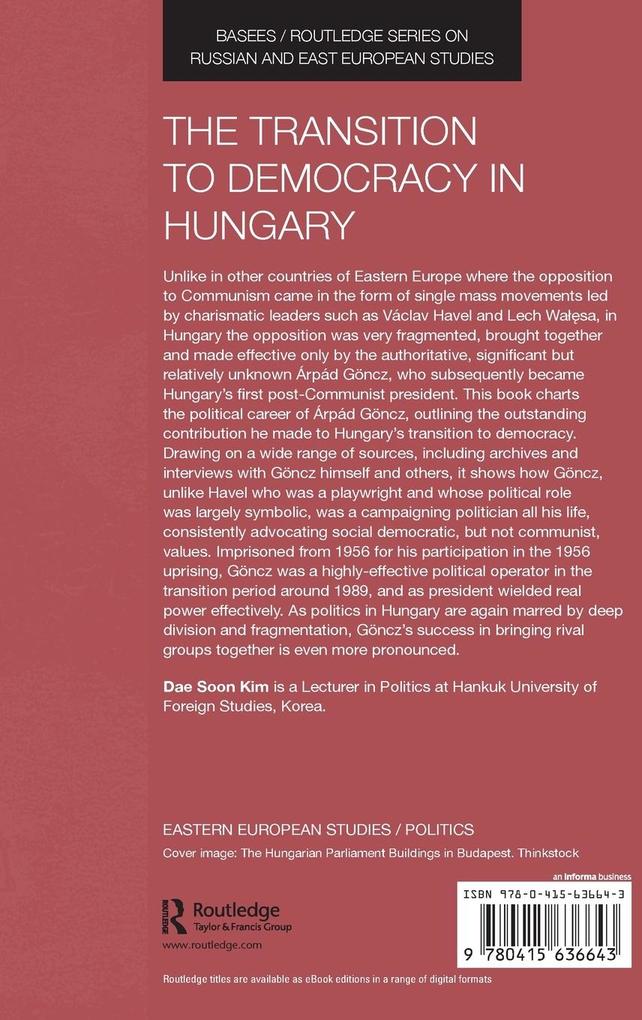
Unlike in other countries of Eastern Europe where the opposition to communism came in the form of single mass movements led by charismatic leaders such as Vaclav Havel and Lech Walesa, in Hungary the opposition was very fragmented. This book focuses on the key role played by À rpá d Gö ncz, Hungary's first post-communist president, in bringing about the end of communism, uniting diverse opposition elements, and in establishing securely the post-communist regime.
Inhaltsverzeichnis
Introduction Part 1: Development of Göncz's political views 1. Beginnings 2. The 1956 Hungarian Revolution 3. Dissidence in the 1980s Part 2: The post-Communist Presidency 4. Development of the post-Communist Presidency in Hungary 5. The first Presidency (1990-1995) 6. The second Presidency (1995-2000) 7. Conclusion