In this book
Jan D. Sinnott
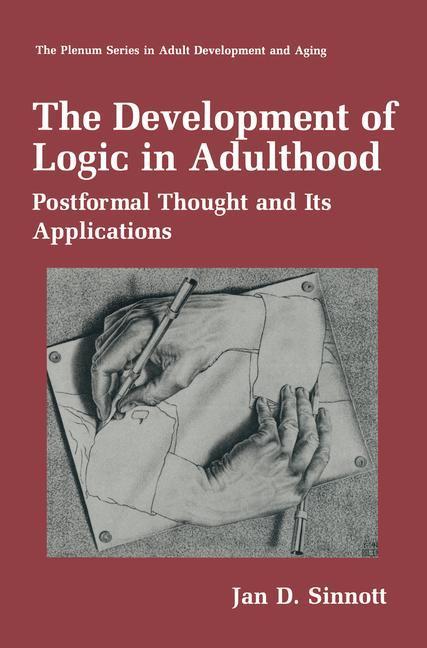
synthesizes her 20 years of research on lifespan cognitive development to describe the growth of complex (or `postformal') thought in adults. She shows specifically how adults improve mentally over a lifetime and learn to think in more complex and wiser ways. Applications of postformal thought are demonstrated in such diverse areas as - family relations - adult education - personal identity - and spirituality. Chapters examine relations between postformal thought and pertinent variables such as age, health, memory, and vocabulary. Other sections deal with issues in humanistic psychology such as - guided imagery - mind - body medicine - and creative intentionality.
Inhaltsverzeichnis
1. Introduction: Creation of a Theory and the Purpose of This Book. - I. The Theory: Description and Development of Complex Postformal Thought. - 2. Limits of Traditional Approaches for Understanding Adult Logical Development. - 3. What Characterizes Postformal Thought? . - 4. Development of Postformal Thought. - 5. New Physics Models Underlying Postformal Thought. - 6. General Systems Theory Underlies Postformal Thought. - 7. Chaos, Complexity, Self-Regulating Systems, and Postformal Thought. - II. Some Research to Support the Theory: Studies of Complex Postformal Thought. - 8. Initial Research: How Do Adults Use Logical Thought? . - 9. Interview and Thinking Aloud Studies: A View of Process. - 10. Age Differences in Processes. - 11. Emotion, Intention, Health, Goal Clarity, and Other Factors in Postformal Thought. - 12. Digging Deeper: A Case Study and Suggestions for Studying Special Subsamples. - III. Applications of the Theory of Postformal Thought at Home and in the Big Picture . - 13. Applications of the Theory of Postformal Thought to Education. - 14. Reinventing the University to Foster and Serve Postformal Thinkers. - 15. Postformal Thought and Multiperson Groups: The Workplace. - 16. Postformal Thought and Multiperson Groups: Couples and Families. - 17. Development and Yearning: Postformal Thought and Spirituality. - 18. Postformal Thought, Creativity, and Creating the Self . - 19. Healing Minds, Bodies, Nations, and the Planet: The Value of Postformal Thought. - 20. Some Uses of Postformal Thought in Humanistic Psychology. - IV. The Next Steps: Interventions Teaching Postformal thinking and Using Postformal Thought to Live in Balance. - 21. Can We Teach Adults To Use Complex Postformal Thought? . - 22. Postformal Thought and Living in Balance. - Appendixes. - A. Measure ofPostformal Thought and Coding and Scoring Guidelines. - Measures. - Coding and Scoring Guidelines. - B. The Narings Liv Project at the Institute for Noetic Sciences. . . - C. Some Readings in Existential, Humanistic, and Transpersonal Psychology and in Mind-Body Medicine. - References.