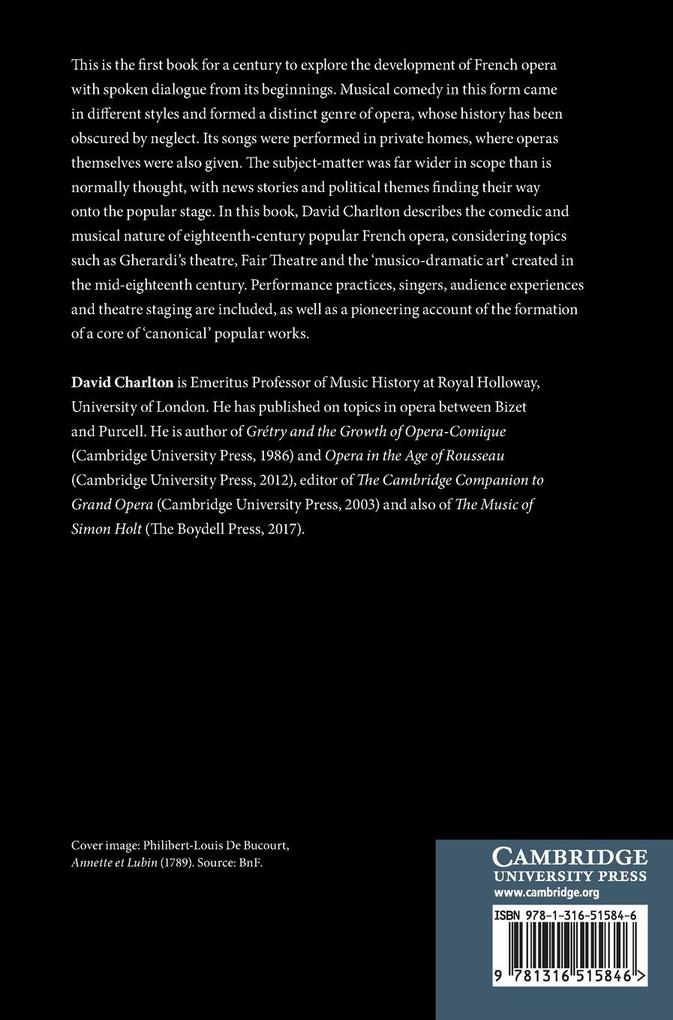
"Popular opera deserves a history, if only to reveal the origins of today's flourishing musical theatre. Operas with spoken dialogue originated in Paris as well as London, some years before The Beggar's Opera. In both countries a tradition of social critique was inscribed from the first. The vaudeville tradition has changed, but its roots are not actually remote: Marie-Justine Favart, the legendary singer, writer and actress discussed in Chapter 10, created the role of Roxelane in Soliman II, a musical play by Charles-Simon Favart: 'The last Roxelane on stage was Madeleine Renaud (1900-94) [...] also one of the first performers in plays by Samuel Beckett (1906-89) and Marguerite Duras (1914-96).'"--
Inhaltsverzeichnis
1. Introduction; 2. Music and spoken theatre; 3. Music in Gherardi's company; 4. Singing and acting at home; 5. Opéra-comique en vaudevilles; 6. Experiences of popular theatre; 7. Comic and serious themes; 8. Performance as history; 9. Musical expansion; 10. Italian inroads: the King's company; 11. Six methods of synthesis; 12. A 'Musico-dramatic art'; 13. Conclusions.