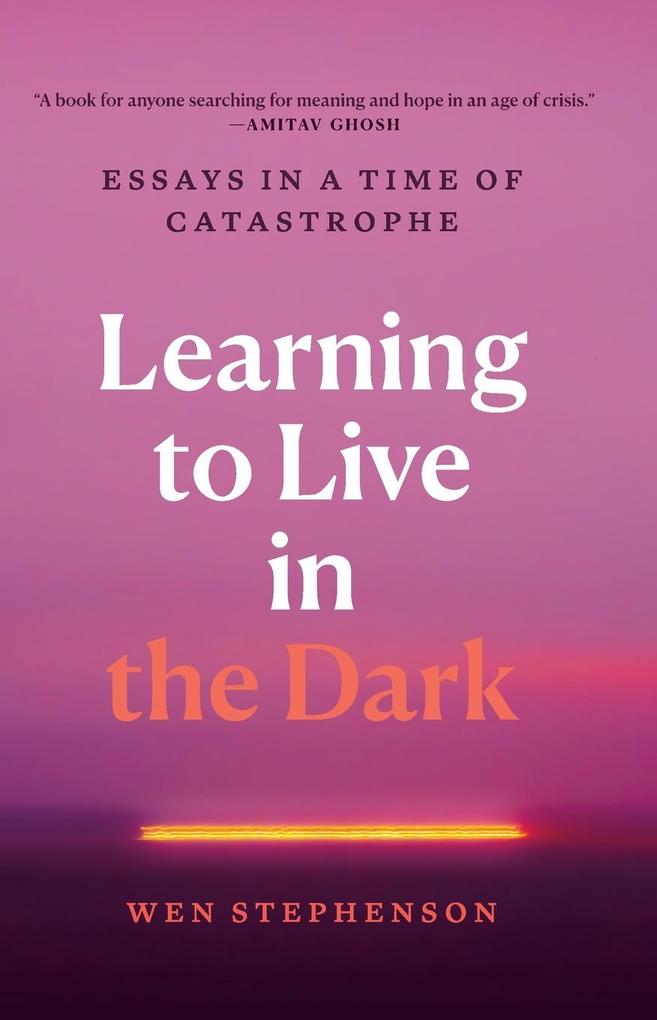
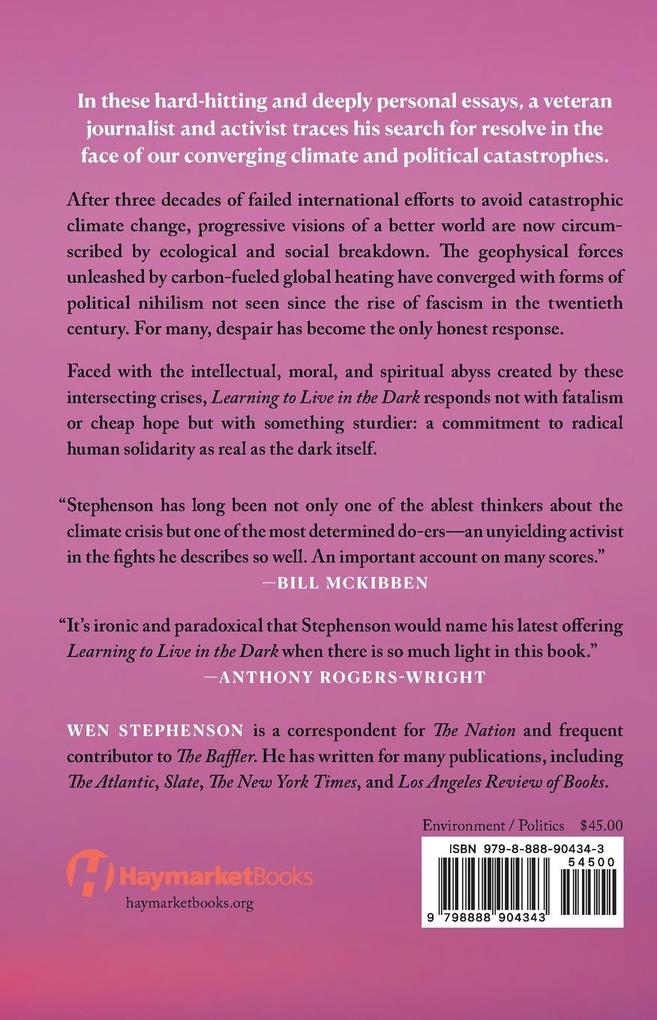
In these hard-hitting and deeply personal essays, Nation writer and veteran activist Wen Stephenson traces his search for resolve in the face of our converging climate and political catastrophes.
After three decades of failed international efforts to avoid catastrophic climate change, progressive visions of a better world are now increasingly circumscribed by ecological and social breakdown. The geophysical forces unleashed by carbon-fueled global heating have converged with forms of political nihilism not seen since the rise of fascism in the 20th century. For many, despair has become the only honest response.
Faced with the intellectual, moral, and spiritual abyss created by these intersecting crises, Stephenson reaches back to the ideas of mid 20th-century thinkers Hannah Arendt, Simone Weil, Albert Camus, and Frantz Fanon, along with contemporary writers engaged in the climate-justice struggle. Throughout, he poses a question that resonates for many on the left today: If nothing short of revolution can salvage the possibility of a better world, and yet if a viable revolutionary-left politics is nowhere on the horizon, then what does a life of radical commitment look like in the shadow of catastrophes that will not wait?
Learning to Live in the Dark answers not with fatalism or any cheap hope, but with something sturdier: a resolve and solidarity as real as the dark itself.
Inhaltsverzeichnis
Preface
Part One
1. Learning to Live in the Dark
Reading Arendt in the Anthropocene. A personal essay.
2. Carbon Ironies
The moral miscalculations of William T. Vollmann's climate fatalism.
3. 'Living in Truth'
Havel, McKibben, the Green New Deal, and the revolution we need now.
4. The Hardest Thing
Arendt, Frantz Fanon, Olufémi Táíwò-and what global solidarity looks like now.
Interlude:
5. Walden at Midnight
Three walks with the radical Thoreau.
Part Two
6. The Social Beast
On the anti-totalitarian spirituality of Simone Weil.
7. Great Sinners
Dostoevsky, my father, and me.
8. The Rebel
Camus and the revolt against nihilism, then and now.
9. How To Blow Up a Climate Fantasy
A specter haunts the climate left. China Miéville, Andreas Malm, and not settling for eco-/genocide.
10. Risk And Revolution
A specter haunts the climate left. China Miéville, Andreas Malm, and not settling for eco-/genocide.
11. The Desperate of the Earth
Gaza, Fanon, anti-colonialism, and the value of humanism in a war(m)ing world
Postlude:
11. Beyond Blasphemies and Prayers
Conversations with Jane Hirshfield, poet of the present moment