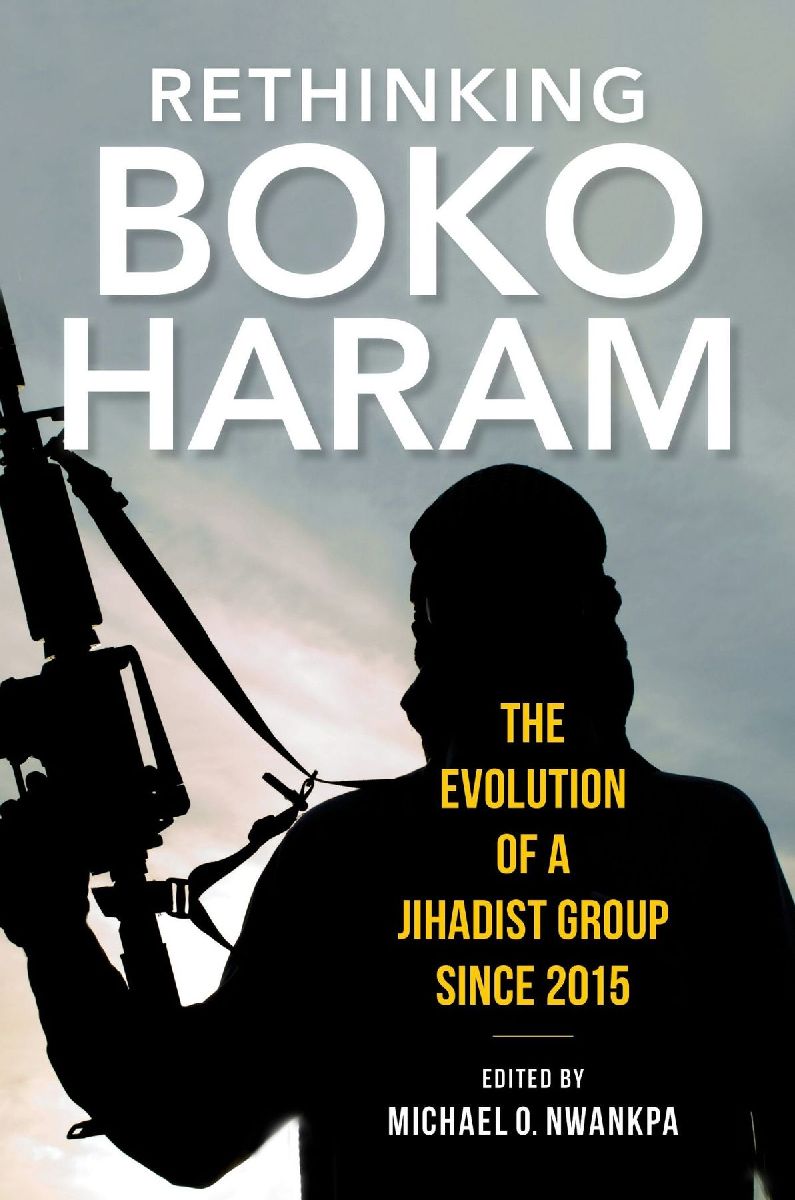
Since the early 2000s, the Nigerian jihadist group Boko Haram has been the subject of thousands of works by journalists, intelligence and NGO officers, and academic writers. Yet due to recycled themes, stale narratives, and fragmented sources, knowledge about the movement's origins, motivations, and continued transformation remains incomplete.
Rethinking Boko Haram provides much-needed updates to older understandings of Boko Haram's religious, political, social, and economic dimensions, proposing new concepts and approaches to the continued study of the movement. Beginning in 2015 when Boko Haram pledged allegiance to ISIS and became the Islamic State in West African Province (ISWAP), this collection deploys firsthand accounts, primary source materials, and fieldwork alongside theoretical approaches to present a new understanding of Boko Haram, from its interactions with the Nigerian military to its more recent adaptations for survival in the face of dwindling local support, climate change, and attempts to build administrations and alliances.
Timely and necessary, Rethinking Boko Haram invites readers to reconceptualize the movement's core elements, revisit its religious motivations, and better understand its possible future.
Inhaltsverzeichnis
Foreword, by David Cook
Acknowledgments
Introduction, by Michael O. Nwankpa
Part 1: Defining Boko Haram: Concept, History, and Method
1. Conceptualizing Boko Haram, by Michael O. Nwankpa
2. Historical Grievances and Jihadist Action: Boko Haram's Strategic Use of History for Socio-Political Change, by Zacharias Pieri
3. Boko Haram and the Neglected Role of Nigeria's Military History, by Oliver O. Coates
4. Twenty Years of Boko Haram Research: Critical Reflections on the State of the Art, by Mark Amaliya Anyorikeya
Part 2: The Military Response and the Evolution of Boko Haram
5. Interrogating the Military's Role in the Emergence and Transformation of Boko Haram Insurgency, by Michael O. Nwankpa and Susan J. Dibal
6. The Evolution of Boko Haram's Target Selection, 2015–2021: A Response to Military Pressure?, by Olivia Shoemaker and Justin Graham
Part 3: Interrogating the Religious Ideology in Boko Haram's Transformation
7. Boko Haram: An Inquiry into Religious Radicalization and Prospects for Peace, by Marc-Antoine De Perouse
Part 4: Boko Haram: New Angles and Approaches
8. Adaptation and Reinvention for Survival: The Case of Boko Haram, by Medinat Malefakis
9. Boko Haram and Islamic State West Africa Province Weaponization of Resource Control: Strategy and Climate Change in Northeast Nigeria, by Usman Tar and Sasilkar Banu
10. The Emergence of the Islamic State by Lake Chad: Popular Perceptions of Marginality, Authority, and Justice, by Alessio Iocchi
11. From Borno to Benin: Understanding the Geographic Diffusion of the Boko Haram Insurgency, 2020–2023, by James Barnett and Murtala Ahmed Rufa'i
12. The Phenomenon of Vigilantism in the Fight against Jihadist Insurgency in Cameroon, by Hans De Marie Heungoup
13. The Rehabilitation Program: Reflections on the Reintegration of Ex-Boko Haram Fighters in Niger, by Maman Inoua Elhadji Mahamadou Amadou
Conclusion: Boko Haram and the Future of Jihadism in Nigeria, by Michael O. Nwankpa
Index