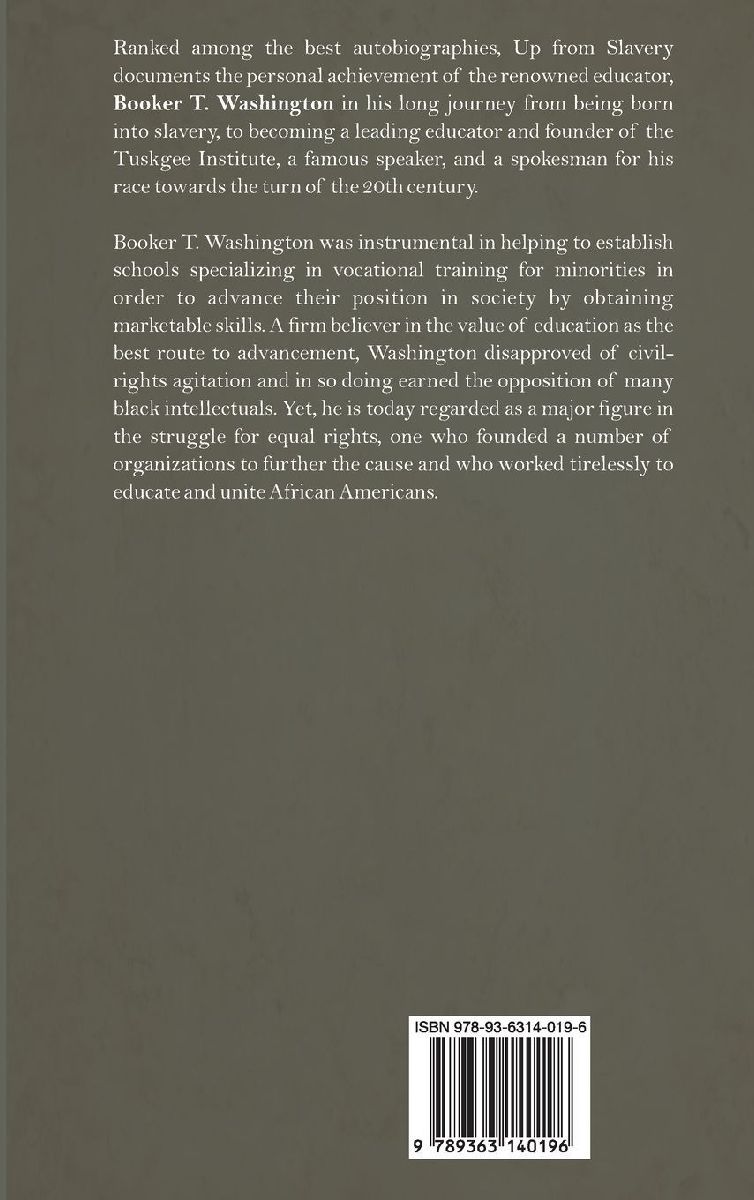
Booker T. Washington was a prominent African American educator, author, and leader born into slavery in Hale's Ford, Virginia, in 1856. After the Civil War, he attended the Hampton Normal and Agricultural Institute, now known as Hampton University, where he received an education that profoundly impacted his life and career.
Washington became one of the most influential figures in the African American community during the late 19th and early 20th centuries. In 1881, he founded the Tuskegee Normal and Industrial Institute, later known as the Tuskegee Institute, in Alabama. This institution aimed to provide practical education and vocational training for African Americans, emphasizing skills that would enable them to achieve economic independence and self-sufficiency.
Through his work at Tuskegee and his numerous public appearances and writings, Washington became a leading voice for African American advancement. He advocated for a philosophy of self-help, urging African Americans to focus on practical education, economic progress, and cooperation with white society, rather than directly challenging the prevailing system of racial segregation and discrimination.
Washington's autobiography, "Up from Slavery," published in 1901, became an instant bestseller and remains a classic work in African American literature. In this book, Washington recounts his extraordinary journey from enslavement to prominence, offering insights into his beliefs about education, race relations, and the importance of hard work and self-reliance.
Throughout his life, Washington faced criticism from some African American leaders and intellectuals who believed his accommodationist approach did not go far enough in challenging racial inequality. However, his pragmatic approach resonated with many Americans, both black and white, and he became one of the most visible African American figures of his time.
Booker T. Washington's legacy continues to be debated and studied today. While some criticize his accommodationist stance, others praise his efforts to build institutions and create opportunities for African Americans in the face of daunting obstacles. Regardless of one's perspective, Washington's contributions to African American education and civil rights are undeniable, and his impact on American history remains profound.