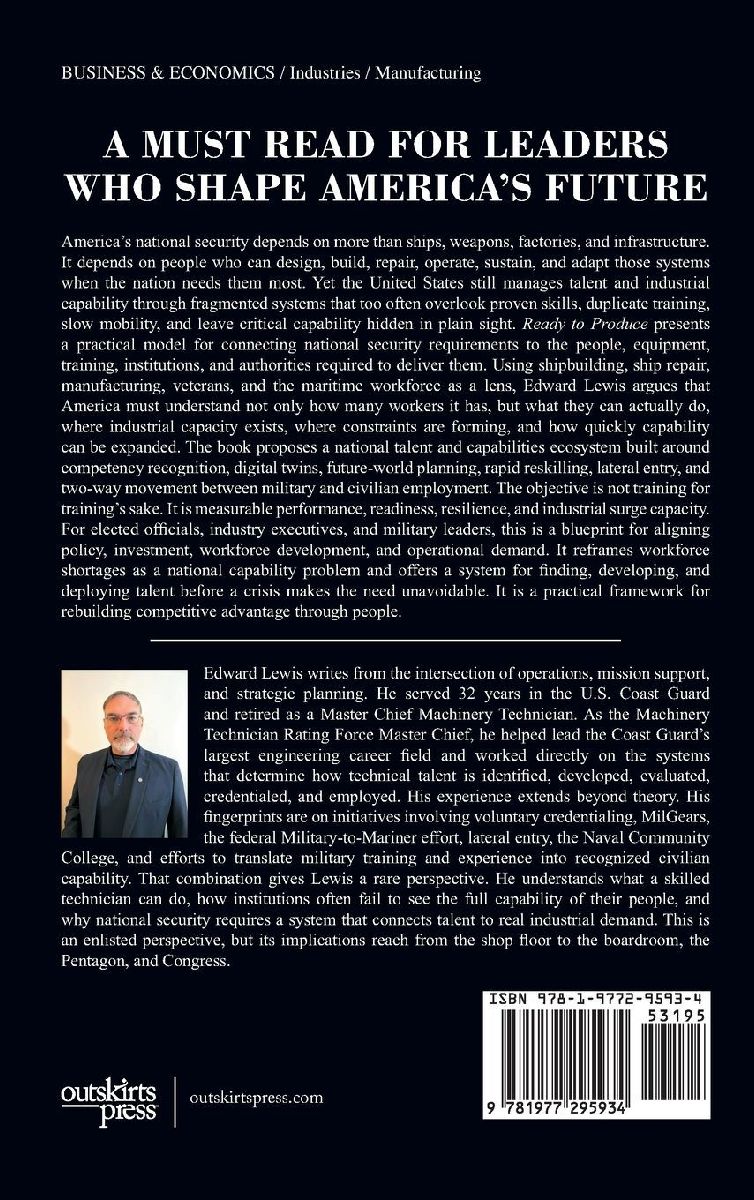
Ed Lewis brings an uncommon blend of operational, technical, workforce, and strategic experience to the challenge of rebuilding America's maritime and industrial capabilities. During a 32-year career in the United States Coast Guard, his assignments ranged from shipboard engineering and maintenance to senior enlisted leadership, including service as the Coast Guard's Machinery Technician Rating Force Master Chief, where he led the service's largest engineering career field. He also served as School Chief of the Coast Guard Chief Petty Officer Academy and in multiple Command Master Chief assignments, advising senior leaders on operational readiness, mission support, workforce development, and organizational performance. His experience extended beyond day-to-day operations into long-range institutional strategy. Lewis contributed to the Commandant's Leadership Advisory Council, participated in the Coast Guard's Outlook Vision Team, supported Evergreen long-range strategic planning, and took part in a joint Royal Navy and U. S. Coast Guard examination of future technical support requirements. These experiences provided firsthand insight into the complex task of translating future missions and strategic objectives into the people, competencies, equipment, policies, and organizational capacity necessary to accomplish them. Lewis holds a master's degree in human service counseling with a focus on military resiliency. His broader workforce efforts have included military credentialing, career development, veteran transition, and initiatives designed to better translate military training, education, and experience into meaningful civilian employment. Following his military service, Lewis became Vice President of Government Relations at Maritime Institute, where he supports strategic partnerships, government engagement, and the expansion of maritime training pathways for the broader maritime workforce. His work with commercial and military customers, organized labor, and public-sector organizations has allowed him to examine workforce and capability challenges from another critical perspective: that of the institutions responsible for developing the skilled workforce needed to meet them. Drawing on decades of experience across operations, leadership, workforce development, strategic planning, and maritime training, Lewis brings a practical, systems-level perspective to the interconnected challenges of workforce development and industrial readiness explored in Ready to Produce.