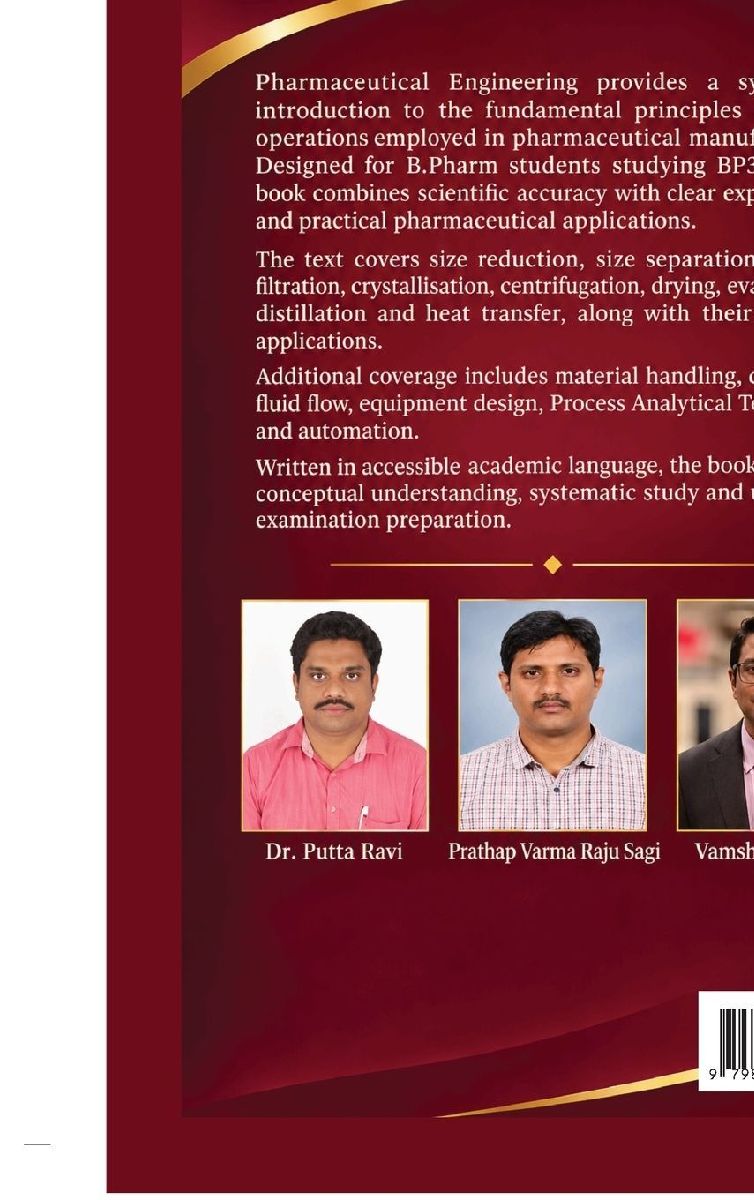
Pharmaceutical Engineering examines the physical principles that govern the movement, transformation and separation of materials during medicine manufacture. Intended for B. Pharm students studying BP307T, it connects engineering concepts with the construction, operation and selection of pharmaceutical processing equipment. The coverage begins with solid-handling operations such as size reduction, size separation and mixing, then develops liquid-processing and thermal operations including filtration, crystallisation, centrifugation, evaporation, drying, distillation and heat transfer. Material handling and storage, corrosion, waste management and fluid-flow measurement extend these principles to plant operations. Reynolds number, Bernoulli's theorem and common flow-measuring instruments are considered in their engineering context. The final chapters address equipment design, the evaluation of thermal processes, Process Analytical Technology (PAT) and automation. Attention to operating variables, driving forces, process resistance and pharmaceutical applications helps students understand not only how equipment works but why its performance changes with process conditions.