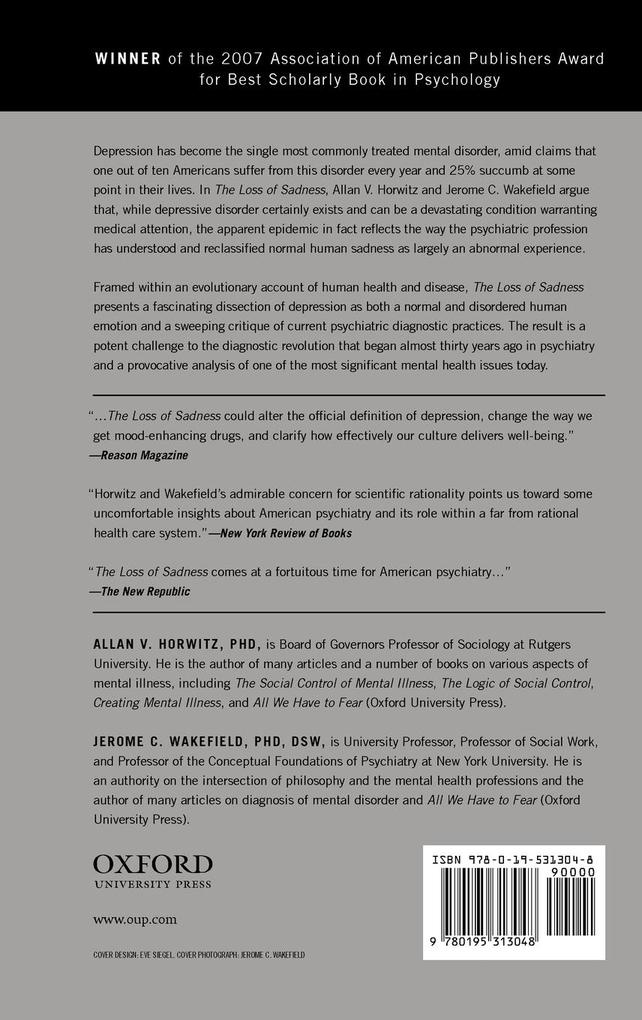
The Loss of Sadness argues that the increased prevalence of major depressive disorder is due not to a genuine rise in mental disease, but to the way that normal human sadness has been 'pathologised' since 1980. That year saw the publication of the landmark third edition of The Diagnostic and Statistical Manual of Mental Disorders (DSM-III), which has since become a dominant force behind our current understanding of mental illness. The result of this is in the years since the DSM-III's appearance, virtually all research and clinical approaches to depression have been based on an flawed definition of the condition, resulting in far-reaching scientfic, social, and political implications that affect us all.
Inhaltsverzeichnis
- 1: The concept of depression
- 2: The anatomy of normal sadness
- 3: Sadness with and without cause: depression from ancient times through the nineteenth century
- 4: Depression in the twentieth century
- 5: Depression in the DSM-IV
- 6: Importing pathology into the community
- 7: The surveillance of sadness
- 8: The DSM and biological research about depression
- 9: The rise of antidepressant drug treatments
- 10: The failure of the social sciences to distinguish sadness from depressive disorder
- 11: Conclusion