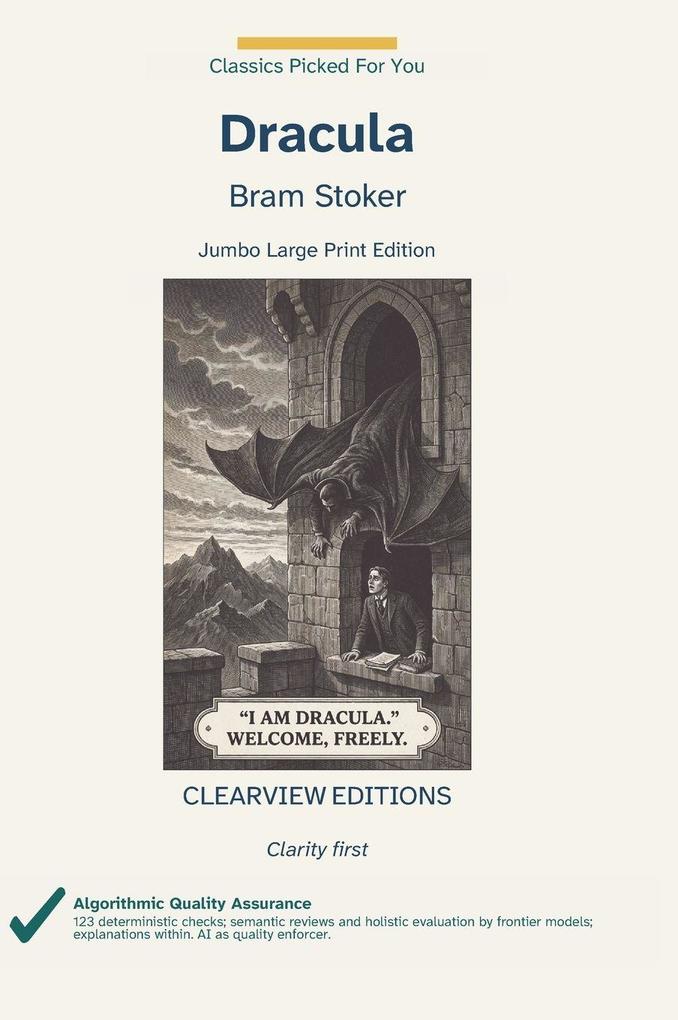
Bram Stoker's Dracula begins with a professional journey that becomes captivity. Jonathan Harker travels to Transylvania to assist Count Dracula with property business in England. At the Count's castle, ordinary habits of hospitality give way to disturbing absences, locked doors, and encounters Harker cannot explain. The narrative then moves to Whitby and London, where events first experienced as private illness or misfortune gradually reveal a shared danger. The Count's movement connects distant places before the people pursuing him can assemble the evidence of what has happened.
The novel tells this story through journals, letters, telegrams, newspaper reports, memoranda, and recorded observations. Jonathan Harker, Mina Murray, Dr. John Seward, and others contribute partial accounts. No single observer has the whole story. Dates, gaps, repeated details, and differences between accounts help turn isolated experiences into a chronology the characters can act upon. Mina's work gathering and arranging these records is a practical part of their effort. The reader follows both the events and the process by which people decide what evidence to trust.
Lucy Westenra's illness draws her friends and suitors into that work. Seward, Arthur Holmwood, Quincey Morris, and Professor Van Helsing confront symptoms and incidents that resist familiar explanations. Mina and Jonathan bring another body of experience to the group. Their alliance depends on cooperation between people with different skills, beliefs, and vulnerabilities. The story moves from bedside observation to investigation, from the search for the Count's resting places to a pursuit that carries the group back across Europe. The closing Note preserves the novel's reflection on the strange collection of documents through which its events have been told.
Dracula's atmosphere comes partly from the meeting of old fears and modern routines. Trains, shipping routes, typewriting, medical practice, and rapid communication become instruments of both danger and resistance. The characters consult timetables, arrange journeys, inspect houses, move through unfamiliar neighborhoods, and compare written records. Against those practical activities stand the Count's antiquity, the uncertainty of the night, and the possibility that a familiar person may have become something else. Stoker repeatedly makes the ordinary setting of a home, bedroom, office, or street feel newly insecure.
This Clearview Editions volume preserves the complete twenty-seven-chapter narrative and its concluding Note, following the retained Project Gutenberg Ebook No. 345 source. It also retains the historical source title-page image and the Grosset & Dunlap advertising pages present in that source edition. Those advertisements belong to the reproduced historical material; they are distinct from Clearview's current publisher notes. The source note identifies the basis of the reading text, while the concise disclosure explains the publisher's role in preparing the large-print volume. The work was first published in 1897.
The 7 by 10 inch casebound format uses 18-point Atkinson Hyperlegible Next type with 27-point line spacing. Ragged-right text and line endings without automatic word division provide a spacious setting for the diaries, letters, conversations, and changing narrative voices. Contents and chapter navigation support reading in installments and returning to earlier evidence. This edition offers the full novel in large type, preserving its documentary structure and its movement from uneasy observation through discovery, collective action, and pursuit. It does not replace Stoker's text with a retelling or insert modern explanations into his narrative.
















![The Future of Soviet Science [1985]](/_next/image?url=https%3A%2F%2Fmedia2.hugendubel.de%2Fshop%2Fcoverscans%2F549%2F54925535_9798259516137_xl.jpg&w=3840&q=75)