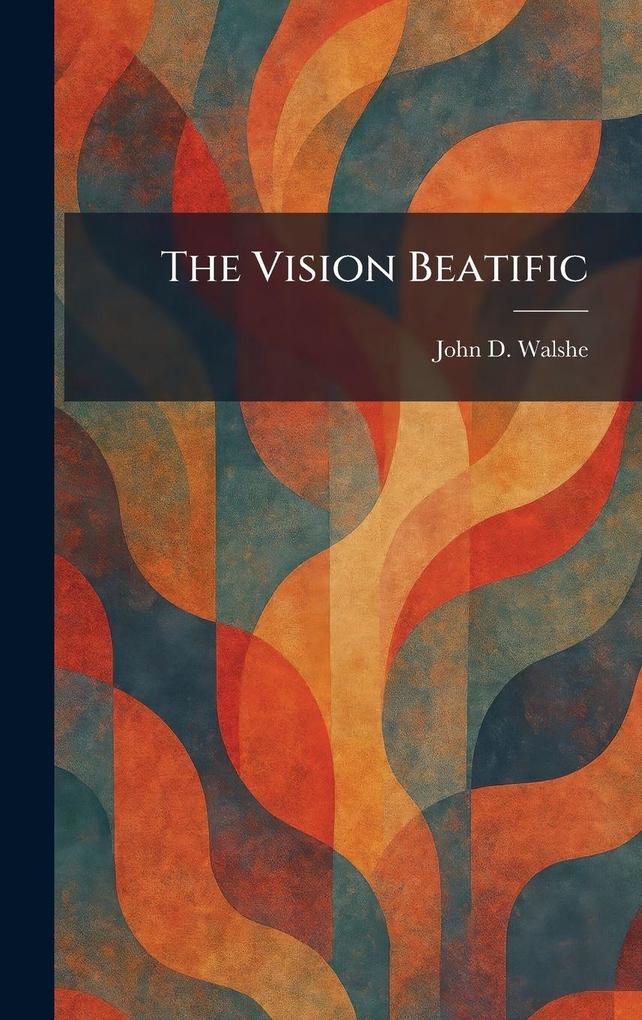
"The Vision Beatific" is a profound poetic exploration of the soul's spiritual ascent and its ultimate union with the divine. Written by the Reverend John D. Walshe, this work delves into the theological concept of the Beatific Vision-the direct and joyful perception of God in the afterlife. Through reverent and lyrical verses, the author depicts the transition from the temporal world to the eternal, capturing the awe and splendor of the celestial realm. Drawing heavily from Catholic tradition and eschatological thought, "The Vision Beatific" functions as both a literary achievement and a powerful devotional text. It encourages the reader to reflect on the mysteries of grace, the nature of salvation, and the infinite beauty of the heavenly kingdom. By emphasizing the peace and fulfillment found in the presence of the Creator, Walshe provides an inspiring vision of the final goal of the faithful soul. This work stands as a significant piece of religious literature, offering a meditative perspective on the culmination of the Christian life and the promise of eternal glory.
This work has been selected by scholars as being culturally important, and is part of the knowledge base of civilization as we know it. This work was reproduced from the original artifact, and remains as true to the original work as possible. Therefore, you may see the original copyright references, library stamps (as most of these works have been housed in our most important libraries around the world), and other notations in the work.
This work is in the public domain in the United States of America, and possibly other nations. Within the United States, you may freely copy and distribute this work, as no entity (individual or corporate) has a copyright on the body of the work.
As a reproduction of a historical artifact, this work may contain missing or blurred pages, poor pictures, errant marks, etc. Scholars believe, and we concur, that this work is important enough to be preserved, reproduced, and made generally available to the public. We appreciate your support of the preservation process, and thank you for being an important part of keeping this knowledge alive and relevant.