Bücher versandkostenfrei*100 Tage RückgaberechtAbholung in über 100 Filialen
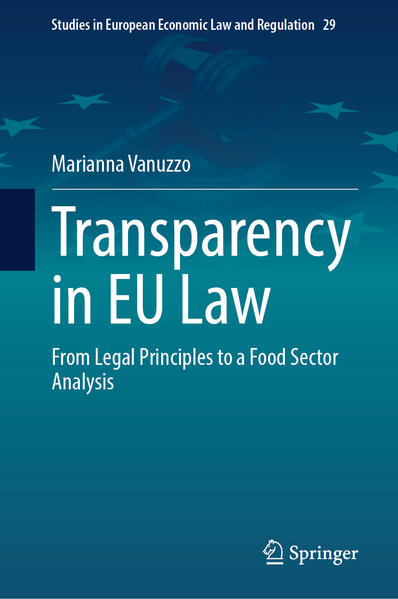
The book provides a comprehensive overview of how transparency is addressed within EU law, with a particular focus on EU food law. This contribution is especially relevant in light of Regulation (EU) 2019/1381 on the transparency and sustainability of the EU risk assessment in the food chain. In recent years, growing public concern over a perceived lack of transparency, further highlighted by the results of the Fitness Check of the General Food Law, has sparked interest in this issue. Beyond this focus, the book adopts a broader approach by examining transparency as a multifaceted concept closely tied to democracy, accountability and other values. Recognising that transparency obligations may extend beyond public authorities, it further explores whether transparency can be applied to the private sector and identifies potential constraints on private actors. Through a conceptualisation of transparency in law and with an innovative analytical approach to legal texts and case law, the book provides researchers, private organisations and institutions with an extensive and nuanced understanding of transparency.
Inhaltsverzeichnis
Introduction. - The Genesis and Role of Transparency in Law. - Is there a General Principle of Transparency in EU Law? . - How is the Principle of Transparency enshrined in current European Food Law? . - How far does the Principle of Transparency constrain the Actions of Private Actors? . - Conclusions.
Es wurden noch keine Bewertungen abgegeben. Schreiben Sie die erste Bewertung zu "Transparency in EU Law" und helfen Sie damit anderen bei der Kaufentscheidung.