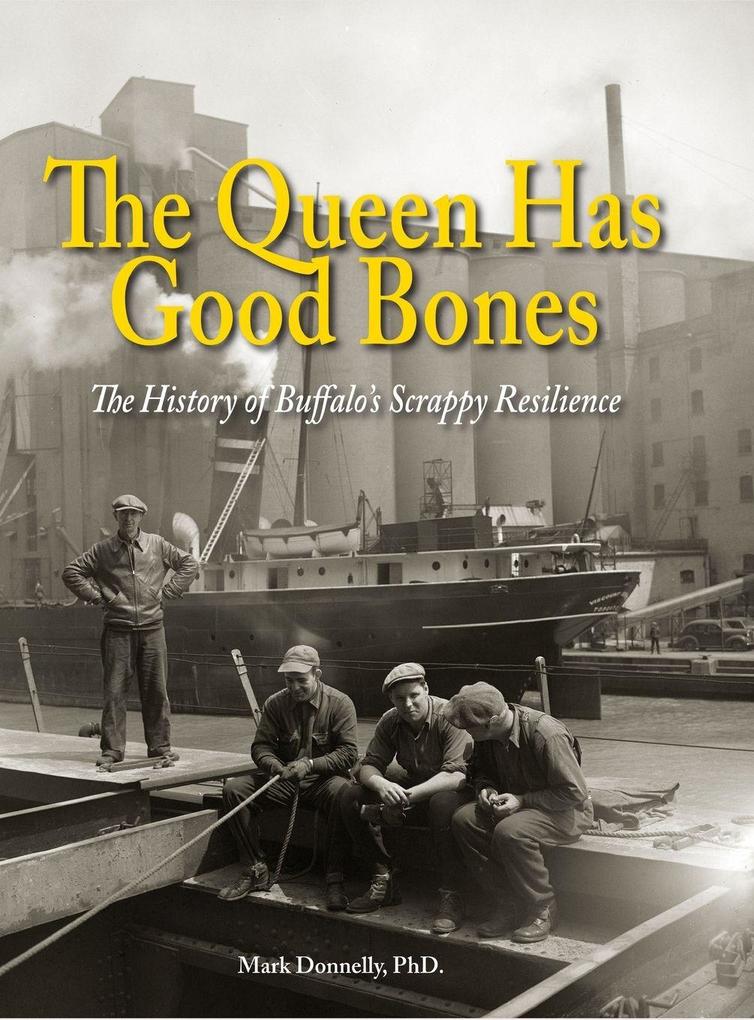
Buffalo does not reinvent itself with spectacle. It reinvents itself with scaffolding.
In The Queen Has Good Bones: The History of Buffalo's Scrappy Resilience, Mark Donnelly, PhD. traces the layered story of a city built on audacity and endurance. From the moment DeWitt Clinton's Erie Canal repositioned Buffalo as a continental gateway, the city learned that infrastructure could alter destiny. Grain elevators rose like industrial cathedrals. Immigrant neighborhoods formed tight communities along the waterfront. Architects gave the skyline Art Deco confidence. Workers built unions, markets, churches, stadiums, and civic institutions sturdy enough to survive downturns.
Yet Buffalo's history is not sentimental. It includes labor unrest, ethnic tension, industrial decline, and moments of painful loss. The city endured cholera outbreaks, economic collapse, urban disinvestment, and the long retreat of passenger rail and manufacturing. Through it all, its people rebuilt from foundations that were never flimsy.
This book explores the neighborhoods that carried identity through change, the waterfront that transformed from industry to recreation, the architectural landmarks that anchor civic memory, and the sports culture that binds generations together-even through the soul-crushing echoes of "No Goal" and "Wide Right."
At its core, The Queen Has Good Bones argues that Buffalo's resilience is not accidental. It is engineered into its streets, carved into its stone, and carried forward by communities that refuse to dissolve.
For readers of urban history, architecture, immigration, labor, and Great Lakes culture, this is both a chronicle and a case study in how cities survive-and why Buffalo continues to stand.