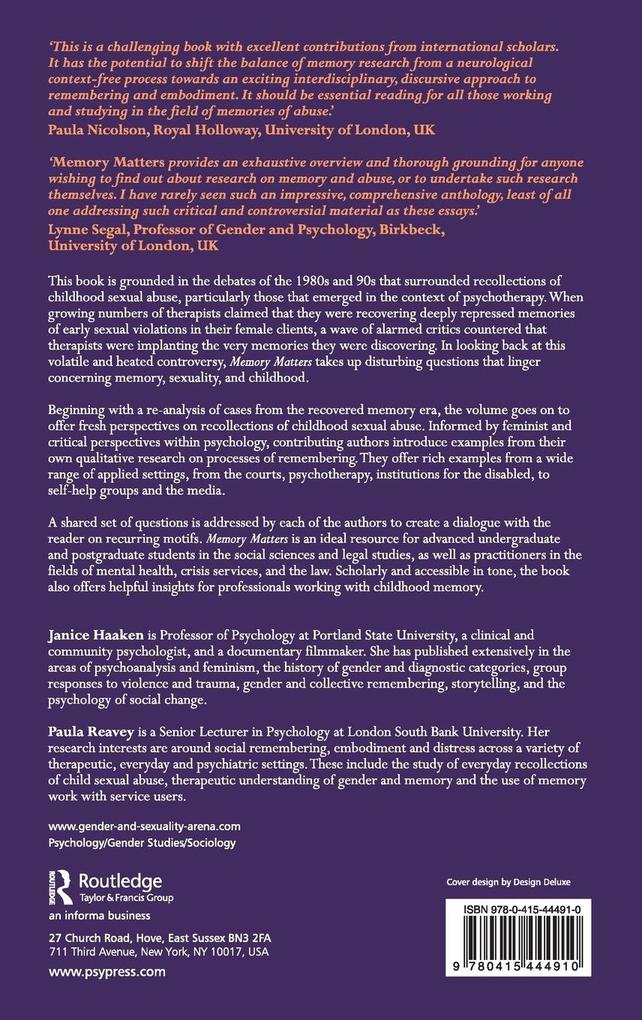
In this volume, the editors make use of current memory scholarship to explore ethical, moral and cultural issues that continue to shape the ways in which memory is conceived in a range of scientific, therapeutic and legal settings.
Inhaltsverzeichnis
J. Haaken, P. Reavey, Why Memory Still Matters: Disturbing Recollections. Section 1: Looking Back on the Recovered Memory Debate: Claims and Counter-claims. M. Ashmore, S.D. Brown, On Changing One's Mind Twice: The Strange Credibility of Retracting Recovered Memories. J. Ost, K. Nunkoosing, Reconstructing Bartlett and Revisiting Retractions of Contested Claims of Abuse. J.F. Motzkau, Speaking Up Against Justice: Credibility, Suggestibility and Children's Memory on Trial. J. Kitzinger, Transformations of Public and Private Knowledge: Audience Reception, Feminism and the Experience of Childhood Sexual Abuse. J. Woodiwiss, 'Alternative Memories' and the Construction of a Sexual Abuse Narrative. Section 2: Widening the Lens: Cultural Contexts for Remembering Child Sexual Abuse. P. Reavey, The Spaces of Memory: Rethinking Agency Through Materiality. K. Robson, 'Truth', Memory and Narrative in Memoirs of Child Sexual Abuse. R. Fyson, J. Cromby, Memory, Sexual Abuse and the Politics of Learning Disability. S. Campbell, Memory, Truth, and the Search for an Authentic Past. E. Burman, Therapy as Memory-work: Dilemmas of Discovery, Recovery and Construction. J. Haaken, Transformative Remembering: Feminism, Psychoanalysis, and Recollections of Abuse.