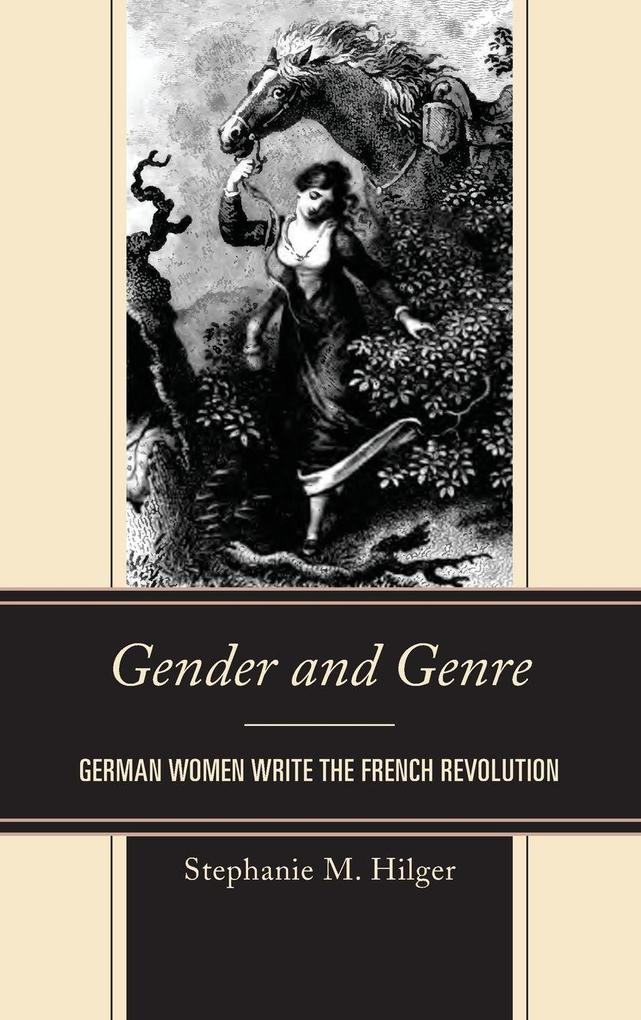
Gender and Genre explores the ways in which German women writers used literature, in the sense of belles lettres, to comment on the French Revolution and its aftermath. By doing so, these authors adapted major literary genres and questioned these genres’ representation of women in the eighteenth- and nineteenth-century literary sphere.
Inhaltsverzeichnis
Preface and Acknowledgments
Introduction: Women Writers, Warriors, and Travelers: The French Revolution in German Literature
Chapter 1: Domestic Fiction, Bourgeois Tragedy, and Gothic Endings: Therese Huber's Die Familie Seldorf (1795-96)
Chapter 2: Historical Fiction: Caroline de la Motte Fouqué's Das Heldenmädchen aus der Vendée (1816)
Chapter 3: Staging Historical Tragedy: Christine Westphalen's Charlotte Corday (1804)
Chapter 4: Autobiographical Petition: The Lebensbeschreibung (1821) of Regula Engel, the "Swiss Amazon"
Chapter 5: Robinsonade as Encyclopedia: Sophie von La Roche's Erscheinungen am See Oneida (1798)
Chapter 6: Bildungsroman of America: Henriette Frölich's Virginia oder die Kolonie von Kentucky (1820)
Conclusion: Fictions of History
Works Cited
Index
About the Author