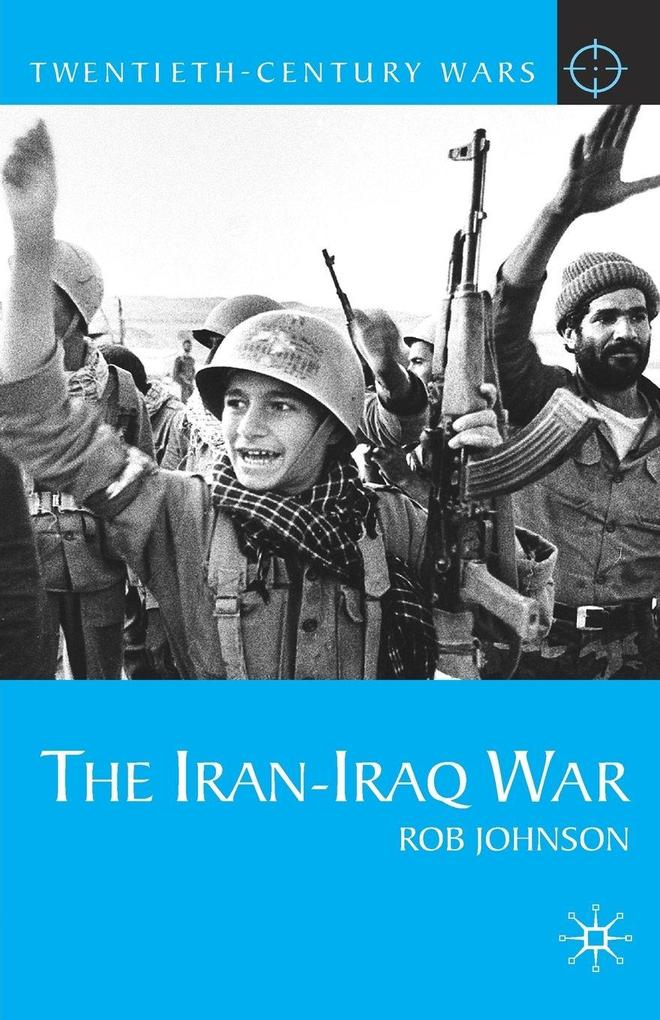
The recent conflicts of the Middle East can be traced directly to the Iran-Iraq War. Rob Johnson provides a sound and clear grasp of the major issues surrounding this war - an essential precursor to understanding the nature of both the Iraqi and Iranian regimes in the 1990s and their regional aspirations, and the ensuing Gulf Wars.
The Iran-Iraq War was personified by the determination and ambition of the key leaders, Saddam Hussein and Ayatollah Khomeini, and characterised by mass casualties, the repression of the civilian populations and chemical warfare. Fought with lucrative oil money, it left the belligerents with crippling debts.
In this important reappraisal, Rob Johnson explores the major issues surrounding the war, offers a fresh analysis of the military aspects and assesses the far-reaching consequences for the wider world. It is essential reading for anyone who wishes to understand the ensuing conflicts in the reqion, including the invasion of Iraq in 2003.
Inhaltsverzeichnis
Preface
List of Maps and Figures
PART ONE: THE CAUSES AND CONTEXT OF THE CONFLICT
Introduction
Iran's Revolution and Iraq's Ambitions
PART TWO: THE EARLY OPERATIONS
The Iraqui Offensive of September 1980 and the Failure of Sadam's 'Limited War'
Human Waves: Iran's Counter-Offensive and Operation Jerusalem, 1981-83
Escalation: Operations Wa al Fajr and Khaibar, 1984
Foreign Intervention, 1980-84
PART THREE: THE SEARCH FOR A DECISIVE RESULT
Turning Point: Operations Badr and Fao, 1985-86
War of the Cities: Home Fronts, International Security and Insurgency
PART FOUR: BREAKING THE IMPASSE
The Tanker War, the Arms Trade and International Intervention, 1985-87
The Failure of Strategy: Iranian Offensives and Iraqi Counter-Offensives, 1987-88
Fuelling the Flames: Gulf Operations 1987-88
CONSEQUENCES AND CONCLUSIONS
The Iran-Iraq War in Retrospect
Notes
Select Bibliography
Index