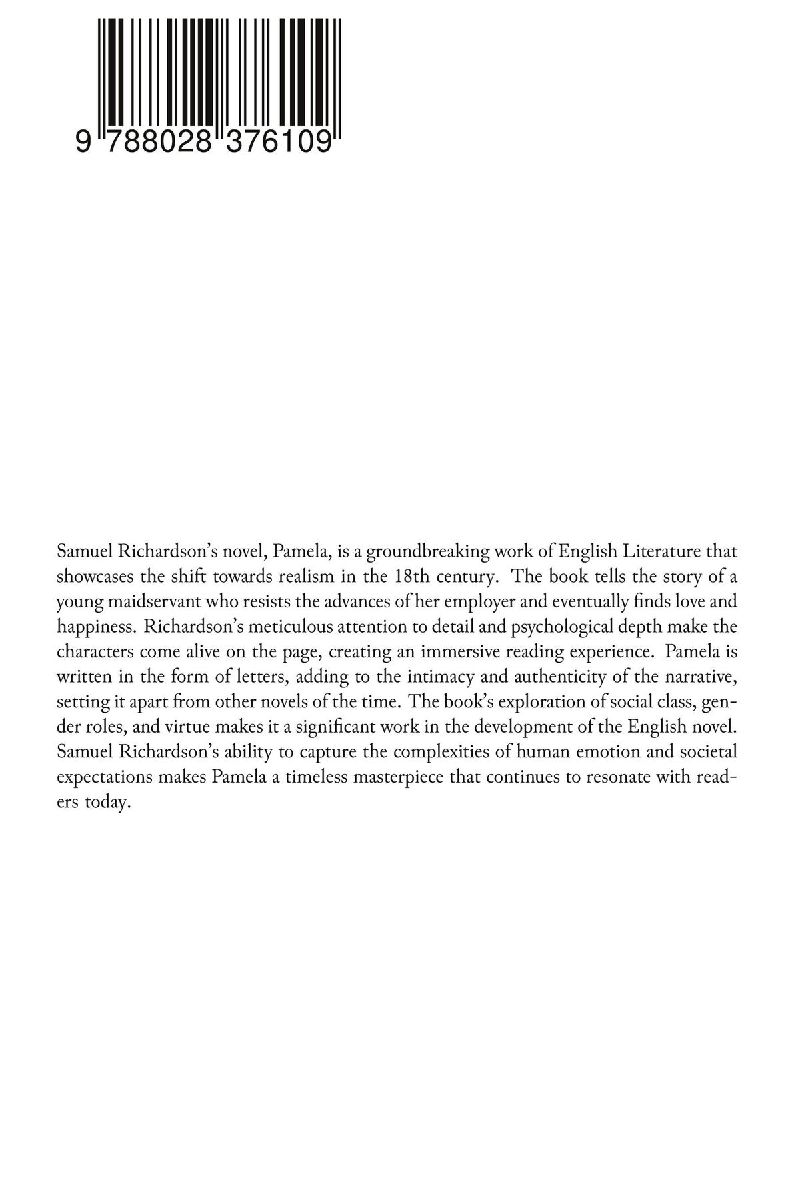
Samuel Richardson's Pamela (1740), subtitled Virtue Rewarded, is a landmark epistolary novel that follows the young servant Pamela Andrews as she resists the sexual coercion of her master, Mr. B. , and negotiates the perilous relation between virtue, social power, and marriage. Told through letters and journals, its intimate style creates psychological immediacy while also revealing the moral surveillance of eighteenth-century culture. The novel stands at the emergence of the English novel, engaging conduct-book traditions, Protestant inwardness, and debates about class mobility and female agency. Richardson, a London printer and publisher, came to fiction through the practical world of letters: he had been asked to compose model correspondence for young readers, a task that shaped Pamela's form and didactic ambition. His familiarity with bourgeois domestic life, moral instruction, and the marketplace for improving literature helped him fashion a narrative that is both sentimental and socially provocative. Readers interested in the history of the novel, gender, and moral psychology should find Pamela indispensable. Its tensions may unsettle modern sensibilities, but they make it a crucial text for understanding eighteenth-century fiction.