Bücher versandkostenfrei*100 Tage Rückgaberecht***Abholung in über 100 Filialen

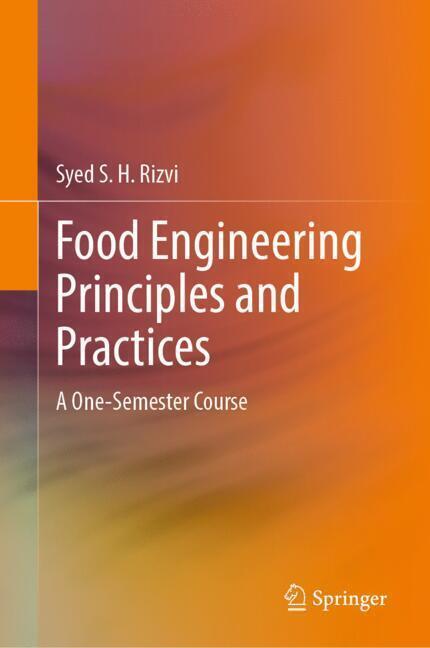
This textbook is designed for a one-semester course on Food Engineering, and it offers a concise, in-depth and integrated introduction to the fundamental engineering and physicochemical principles and practices of utility in food processing and manufacturing operations. The textbook includes topics mandated by the Institute of Food Technologists for accreditation of Food Science curricula and helps prepare the students better for taking advance courses related to unit operations in food manufacturing. It is also relevant for Food Process Engineering courses, containing materials that most instructors can cover in three semester hours of instruction. In the first three chapters, readers will find an overview of the basic knowledge of physics and chemistry and an introduction to the engineering language needed to eliminate confusion going forward. In the following chapters, the author covers the main concepts of food thermodynamics, heat transfer-radiation in foodmaterials, mass transfer and fluid dynamics in food, along with real-life examples and exercises to help students relate better to the topics. The author also gives a brief introduction to the main mathematical and analytical concepts required in food engineering.
This textbook equips readers to understand a diversity of food engineering related topics and each chapter is enriched with practical examples and Check Your Understanding sections, as well as several problems. The textbook is aimed at undergraduate food science students in their first required introductory food engineering course, but practitioners involved in designing, optimizing, and managing the processing of food products will also find it a useful account.
Inhaltsverzeichnis
Es wurden noch keine Bewertungen abgegeben. Schreiben Sie die erste Bewertung zu "Food Engineering Principles and Practices" und helfen Sie damit anderen bei der Kaufentscheidung.