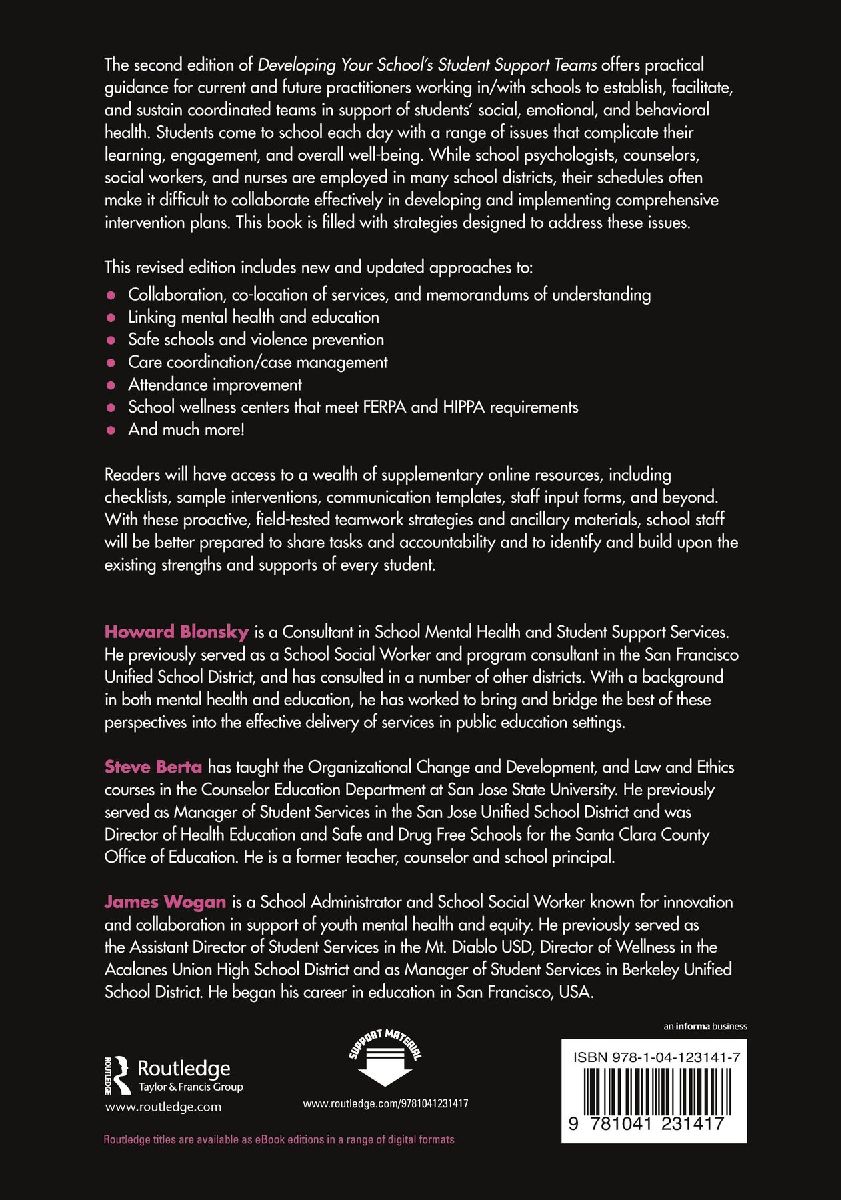
The second edition of Developing Your School's Student Support Teams offers practical guidance for current and future practitioners working in/with schools to establish, facilitate, and sustain coordinated teams in support of students' social, emotional, and behavioral health. Students come to school each day with a range of issues that complicate their learning, engagement, and overall well-being. While school psychologists, counselors, social workers, and nurses are employed in many school districts, their schedules often make it difficult to collaborate effectively in developing and implementing comprehensive intervention plans. This book is filled with strategies designed to address these issues.
This revised edition includes new and updated approaches to:
- Collaboration, co-location of services, and memorandums of understanding
- Linking mental health and education
- Safe schools and violence prevention
- Care coordination/case management
- Attendance improvement
- School wellness centers that meet FERPA and HIPPA requirements
- And much more!
Readers will have access to a wealth of supplementary online resources, including checklists, sample interventions, communication templates, staff input forms, and beyond. With these proactive, field-tested teamwork strategies and ancillary materials, school staff will be better prepared to share tasks and accountability and to identify and build upon the existing strengths and supports of every student.
Inhaltsverzeichnis
1. School-Based Student Support Structures and the Multi-Level Identification and Intervention Process 2. The School Coordinated Care Team (SCCT) 3. The Student Success Team (SST) Philosophy and Implementation 4. School Attendance Improvement 5. The Student Attendance Review Team (SART) 6. Meeting Facilitation 7. The Benefits of Effective Teaming 8. Supporting and Serving Specials Populations 9. School Climate and Culture in Relation to Students' Mental Health and Well-Being 10. Partnership Agreements and MOU's 11. Collaboration and Confidentiality 12. Joining Mental Health Professionals and Educators 13. Wellness Centers 14. School Violence Prevention and Early Intervention 15. Threat Assessment in Schools: The Threat Assessment Team 16. Establishing and Mobilizing Crisis Intervention Teams (CIT) 17. Care Coordination (Aka Case Management) 18. Making the Home-School Connection a Positive One 19. Positive Behavioral Support vs. the Punishment Paradigm