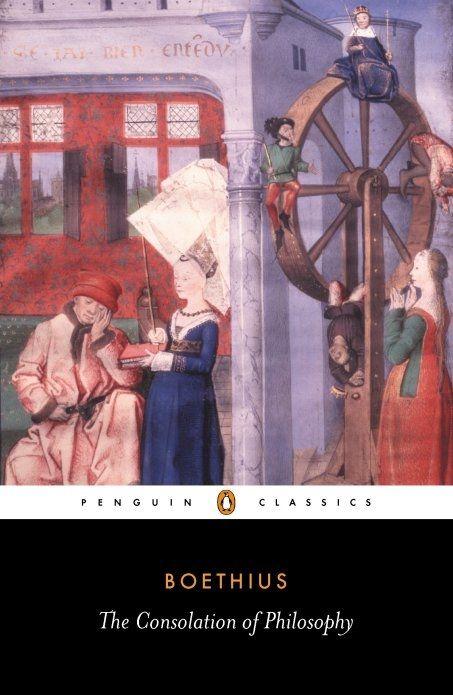
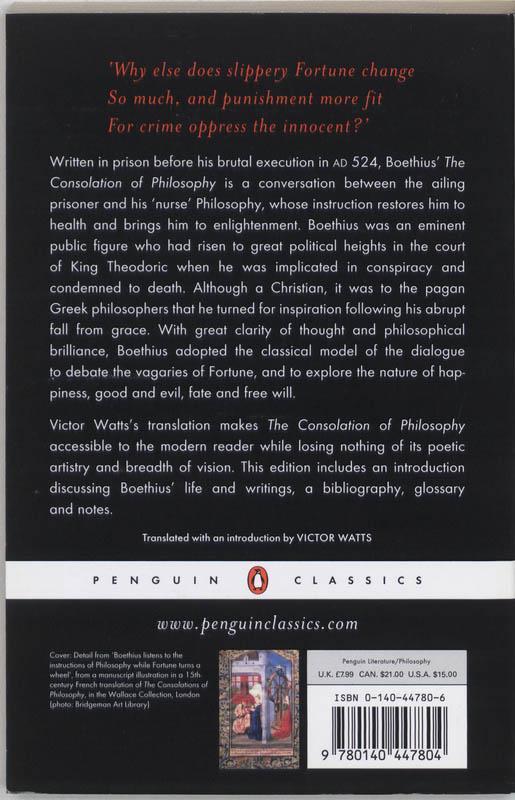
An accessible translation of the classic writings that influenced Chaucer and Dante
Boethius was an eminent public figure under the Gothic emperor Theodoric, and an exceptional Greek scholar. When he became involved in a conspiracy and was imprisoned in Pavia, it was to the Greek philosophers that he turned. Extremely popular throughout medieval Europe, The Consolation was written in the period leading up to his brutal execution. It is a dialogue of alternating prose and verse between the ailing prisoner and his "nurse" Philosophy. Her instruction on the nature of fortune and happiness, good and evil, fate and free will, restore his health and bring him to enlightenment.
Penguin Classics is the leading publisher of classic literature in the English-speaking world, representing a global bookshelf of the best works throughout history and across genres and disciplines. Readers trust the series to provide authoritative texts enhanced by introductions and notes by distinguished scholars and contemporary authors, as well as up-to-date translations by award-winning translators.
Inhaltsverzeichnis
The Consolation of Philosophy
" cellpadding="0" cellspacing="5" border="0"Preface
Introduction
I. Introductory
II. Boethius' Life and Writings
III. The Consolation of Philosophy
IV. The Christianity of Boethius
V. The Text
The Consolation of Philosophy
Book I
Book II
Book III
Book IV
Book V
Bibliography
Glossary