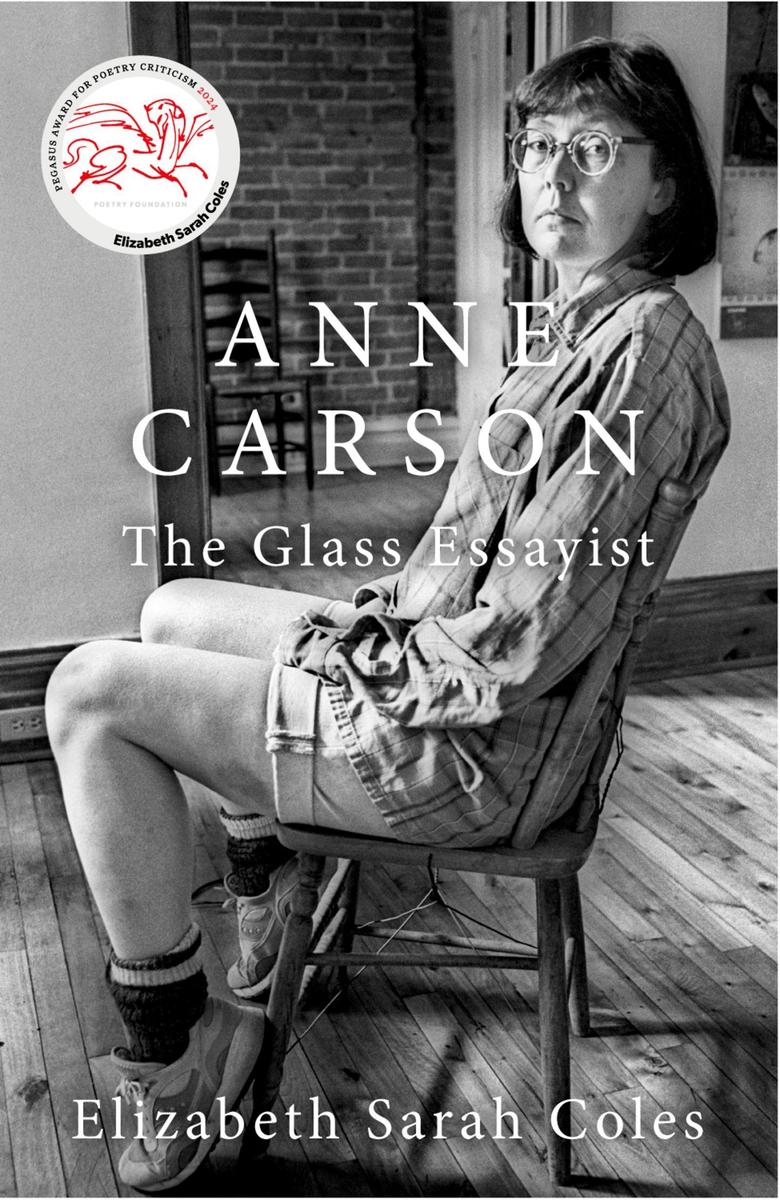
The scholar is transparent and accountable, the poet inward and errant: anyone who reads Anne Carson has to suspend many such separations of power. The first monographic study of her work to date, Anne Carson: The Glass Essayist makes the case for the acclaimed poet, classicist, and translator as a remarkable experimental scholar and reader, who rehearses scholarly methods while slipping their constraints of form and emotion. Carson's attention to sources -- ancient and modern, textual or visual -- is one of few constants across almost four decades of her published writing, whose uncertain claims on discipline and genre are claimed here as a certain interpretive style.
The book follows Carson's readings through variations in form -- from early academic prose and poems, essays to creative adaptations, and works for performance -- to come to grips with what Coles calls Carson's transparency: not her easiness or literalism, but a taste for the exposure of her presence, process, and intent. Carson's portraits of working perform to readers even where she fantasizes her own erasure; where chance, poetic economy, impersonation, and imitation ride the line of anonymity. Coles situates Carson in a vibrant contemporary conversation around the essay, scholar-poets, and post-critical form, where creation transacts critique, and where roles and prerogatives are reset. Reading Carson as a reader, the book argues, is the most pressing way of reading her now.
Inhaltsverzeichnis
- A Note on the Text
- Introduction
- I. VARIATIONS IN CRITICISM
- 1. The Eros Variations
- 2. Criticism and the Gift (Carson with Celan)
- II. GLASS ESSAYS
- 3. On Not Being Emily Brontë
- 4. Lyric Transparency and the 'Fictional Essay'
- III. SPECULATIVE FORM
- 5. Decreation, or the Art of Disappearance
- 6. Fake Women
- IV. OPEN TRANSLATION
- 7. Grief Lessons (Two Stories of Translation)
- 8. Sappho in the Open
- Postscript: Short-Talking
- Acknowledgements
- Bibliography
- Notes
- Index