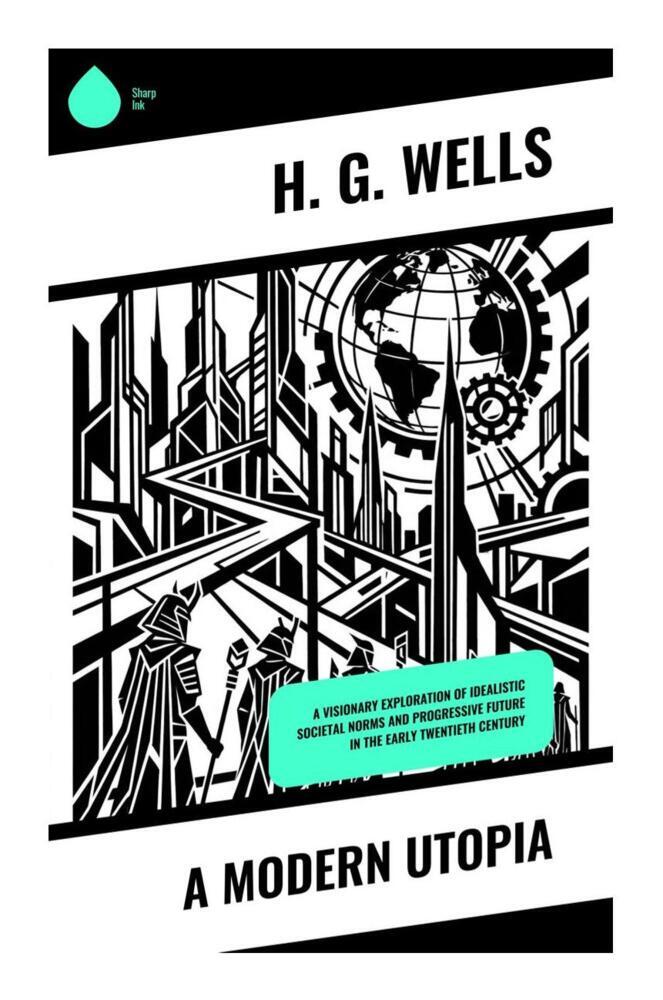
In "A Modern Utopia," H. G. Wells embarks on a visionary expedition into the realm of social organization and philosophical speculation. Published in 1905, the book is a testament to Wells' imaginative prowess and his deep engagement with the intellectual currents of his time. Employing a unique narrative style, it follows two protagonists who traverse a parallel Earth where a global utopian state is governed by a noble order of Samurai, guardians of law and ethical standards. This narrative serves as a platform for Wells to dissect social structures, explore the role of technology in societal advancement, and interrogate notions of justice and equality, all rendered with his characteristic eloquence and foresight. H. G. Wells, a prolific author known for his science fiction and socio-political narratives, was deeply influenced by the rapid technological advancements and social upheavals of the late 19th and early 20th centuries. His keen interest in science, coupled with his socialist ideals, fueled his exploration into constructing alternate worlds where idealism and practicality coexist. Wells' vision in "A Modern Utopia" reflects his unwavering belief in the potential for progress and reform, driven by education, science, and a unified world governance. "A Modern Utopia" is recommended for those who are intrigued by the intersection of science fiction and social commentary. This book challenges readers to reflect on current societal norms while envisioning possible futures molded by human ingenuity and ethical consideration. Wells' detailed world-building and thought-provoking discourse make this a compelling read for anyone interested in the interplay between technology, governance, and utopian ideals.