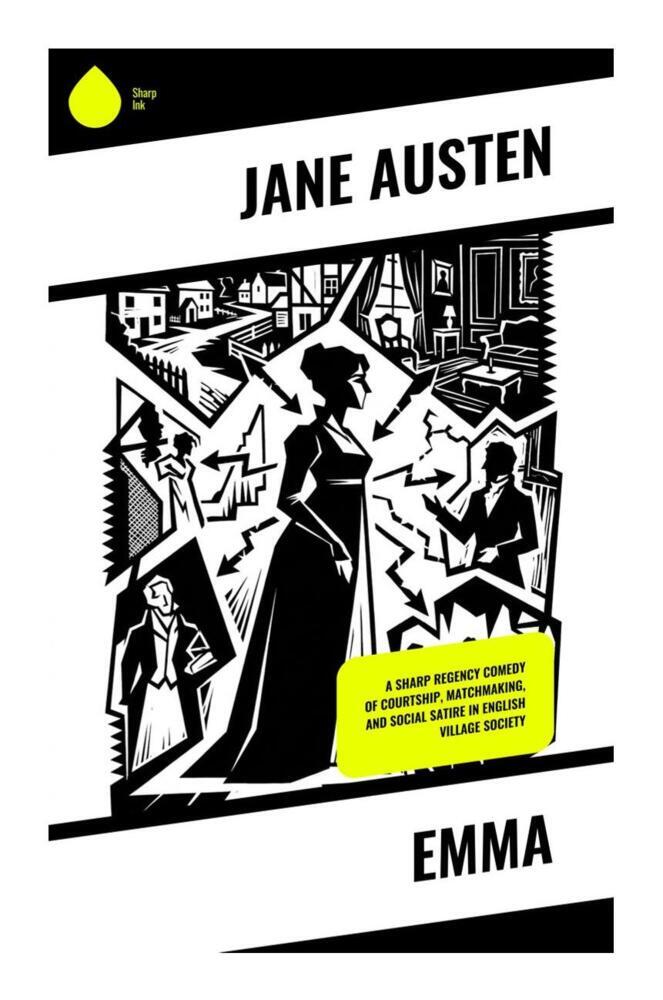
In Emma, Jane Austen crafts a brilliant comedy of manners centered on Emma Woodhouse, a clever, privileged young woman whose confidence in her talent for matchmaking repeatedly misreads the social and emotional realities around her. Written in Austen's mature style, the novel combines polished irony, subtle free indirect discourse, and acute psychological observation to expose the illusions of self-knowledge. Set within the tightly ordered world of Highbury, Emma stands as a landmark of Regency fiction, transforming courtship and domestic life into a sophisticated study of class, vanity, and moral education. Austen, the daughter of an Anglican clergyman, drew deeply on her intimate knowledge of rural gentry society, its rituals, speech, and limitations. Her lifelong attention to the economic and social pressures shaping women's lives informs Emma with unusual precision. By the time she wrote the novel, Austen had refined her art into a form capable of balancing wit with ethical seriousness, and Emma reflects her mature interest in character, judgment, and the discipline of sympathy. This novel is especially recommended to readers interested in the development of the English novel, women's writing, and the interplay of satire and sentiment. Emma rewards both first-time readers and seasoned scholars with its elegance, humor, and inexhaustible intelligence.