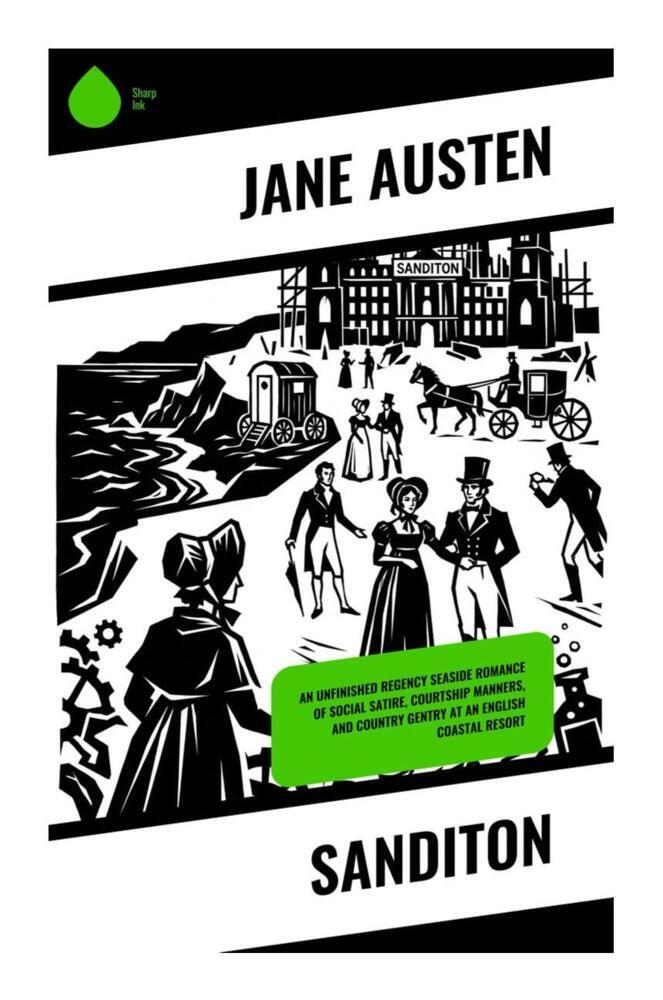
Sanditon, Jane Austen's unfinished final novel, turns from the settled inland worlds of her earlier fiction to a speculative seaside resort animated by commerce, health culture, and social reinvention. Through the clear-sighted observations of Charlotte Heywood, Austen satirizes entrepreneurial enthusiasm, fashionable invalidism, and the restless energies of a modernizing England. The prose retains her characteristic precision, irony, and moral intelligence, while the fragmentary form lends the work a special literary interest: it stands at the threshold of the nineteenth-century resort novel, revealing Austen testing new social terrain without abandoning her acute comedy of manners. Written in 1817, during the last year of Austen's life, Sanditon reflects both her artistic maturity and her continuing responsiveness to contemporary change. By this stage she had already perfected the domestic novel in works such as Emma and Persuasion, yet here she broadens her canvas to include speculation, urban aspiration, and bodily obsession. Her illness and early death left the novel incomplete, but the surviving chapters vividly display an author still experimenting, still incisive, and fully alert to the absurdities of her age. Sanditon is especially recommended to readers interested in Austen's late style, in the evolution of the English novel, and in unfinished masterpieces that illuminate an author's final preoccupations. It rewards both devoted Austen readers and newcomers drawn to elegant satire and social insight.