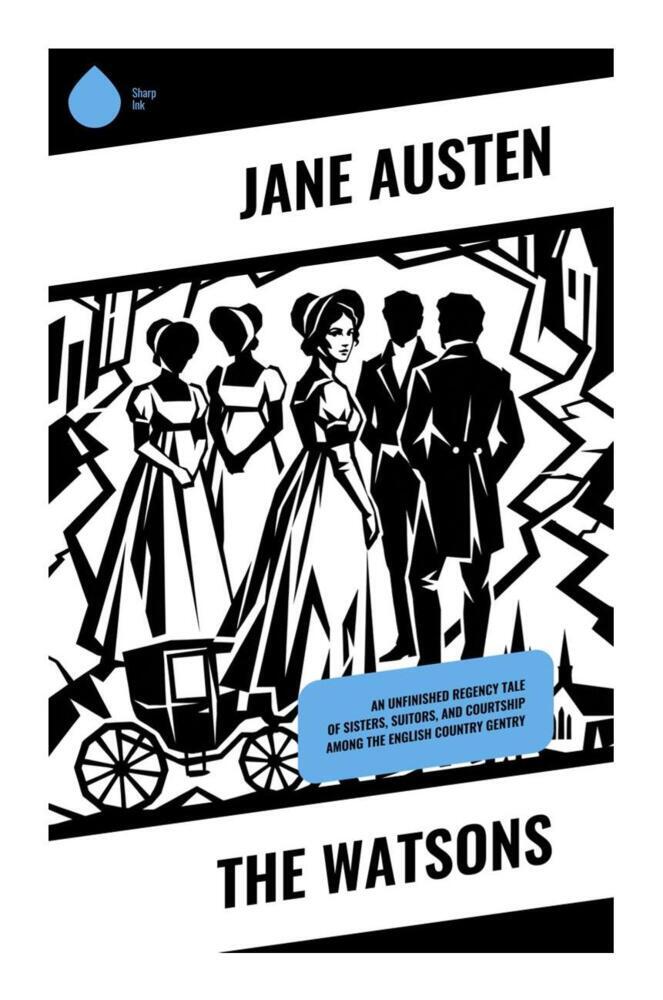
Jane Austen's The Watsons, an unfinished novel composed in the early nineteenth century, offers a sharply observant study of family dependency, marriage prospects, and social maneuvering in provincial England. Centered on Emma Watson, newly returned from a more privileged upbringing to the constrained world of her birth family, the narrative examines the precarious position of unmarried women with Austen's characteristic irony, psychological precision, and command of dialogue. Though fragmentary, the work clearly belongs to the moral and social terrain of Sense and Sensibility and Pride and Prejudice, revealing Austen's mature interest in rank, money, and self-knowledge. Austen, daughter of a clergyman and one of the supreme novelists of manners, wrote from intimate familiarity with the genteel yet economically vulnerable class she anatomized so brilliantly. Her fiction persistently investigates how women negotiate limited choices within rigid social structures. The Watsons appears to have emerged from this continuing concern, perhaps deepened by Austen's own awareness of financial insecurity, domestic obligation, and the subtle humiliations attached to dependence. This book is especially recommended to readers of Austen who wish to see her artistry in development and to scholars interested in the evolution of her themes. Even unfinished, The Watsons is invaluable: a lucid, incisive, and revealing work that illuminates both Austen's method and the social world she made immortal.