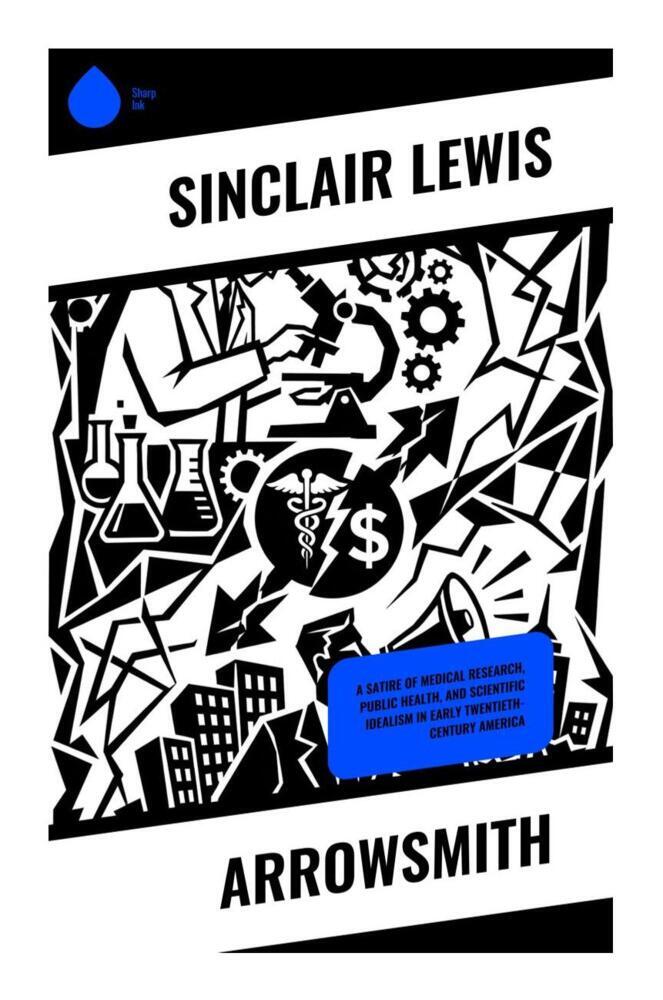
In Arrowsmith, Sinclair Lewis fuses the scientific novel with social satire to trace Martin Arrowsmith's uneasy passage from idealistic medical student to internationally recognized bacteriologist. Published in 1925, the novel anatomizes American medicine at a moment when laboratory research, public health, and commercialized practice were competing to define the profession. Lewis's prose is brisk, observant, and unsparing, balancing detailed depictions of scientific work with a broad critique of boosterism, institutional vanity, and the moral compromises demanded by modern success. The result is both a Bildungsroman and a searching study of science under pressure. Lewis, the first American to receive the Nobel Prize in Literature, was uniquely equipped to write such a book. A chronicler of American provincialism, conformity, and professional pretension, he collaborated closely with the microbiologist Paul de Kruif, whose expertise gave the novel unusual technical credibility. Lewis's enduring preoccupation with the collision between individual integrity and social expectation shapes Martin's struggle between pure research and worldly reward. This is an essential novel for readers interested in the culture of medicine, the ethics of scientific inquiry, and the American novel between realism and modern satire. Arrowsmith remains intellectually vivid, historically revealing, and strikingly relevant.