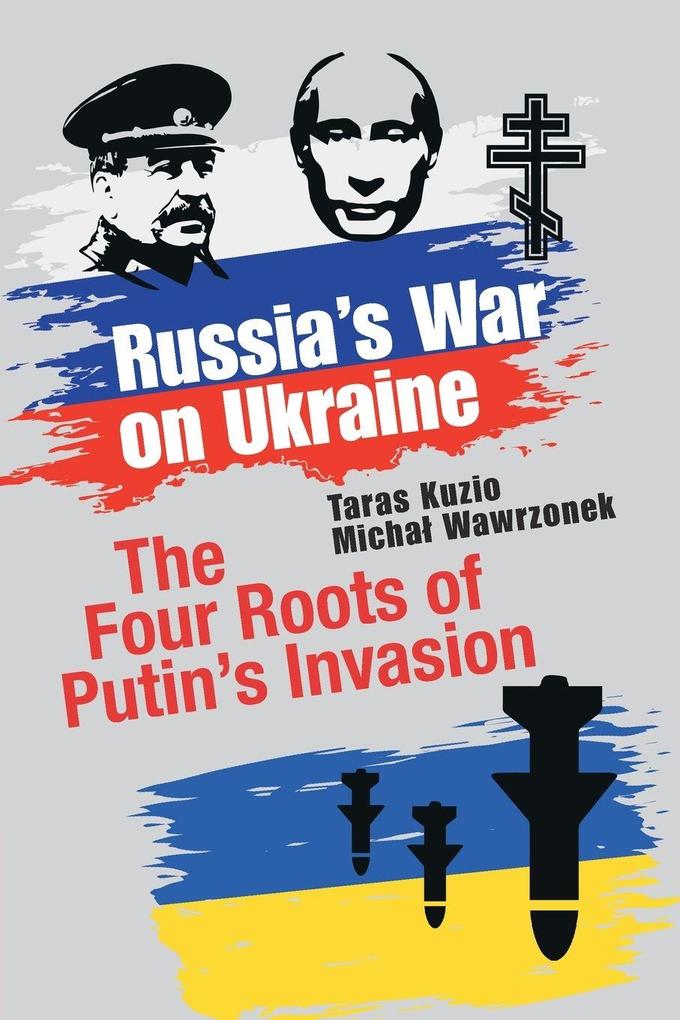
Understanding why Russia invaded Ukraine in 2014 and 2022 is vital for preparing for what may come next. This groundbreaking book is the first to provide an interdisciplinary study of the first full-scale war in Europe since 1945, which is having global ramifications on interstate relations, international law, international organisations, energy questions and economies. Written by two leading scholars of Ukrainian and Russian politics and history, and based on extensive field work and primary sources, the book moves beyond established Western ideas about Russia to show that Russian military aggression against Ukraine is domestically, not externally, driven. The authors analyse the statements and policies of the Russian leadership under Putin, Russia's post-communist political culture and Russia's understanding of itself as a civilisation without borders. Imperial nationalism, nostalgia, Russia's divergent identity and political system to Ukraine's, and Kremlin anti-Western xenophobia are the key elements underlying Russian aggression.
Inhaltsverzeichnis
Introduction: the four roots of Russia's war against Ukraine; Part I. Imperialism and Nationalism: 1. Imperial nationalism; 2. Pan-Russian world and Ukraine; 3. Russian orthodox church and Ukraine; Part II. Nostalgia: 4. Great patriotic war and cult of Stalin; 5. Ukrainian 'nationalists/fascists/nazis'; Part III. Divergence: 6. Diverging identities in Russia and Ukraine; 7. Diverging political systems in Russia and Ukraine; Part IV. International Dimension: 8. Messianism, imperialism and anti-colonialism; 9. Xenophobia; Index of names.