Bücher versandkostenfrei*100 Tage Rückgaberecht***Abholung in über 100 Filialen
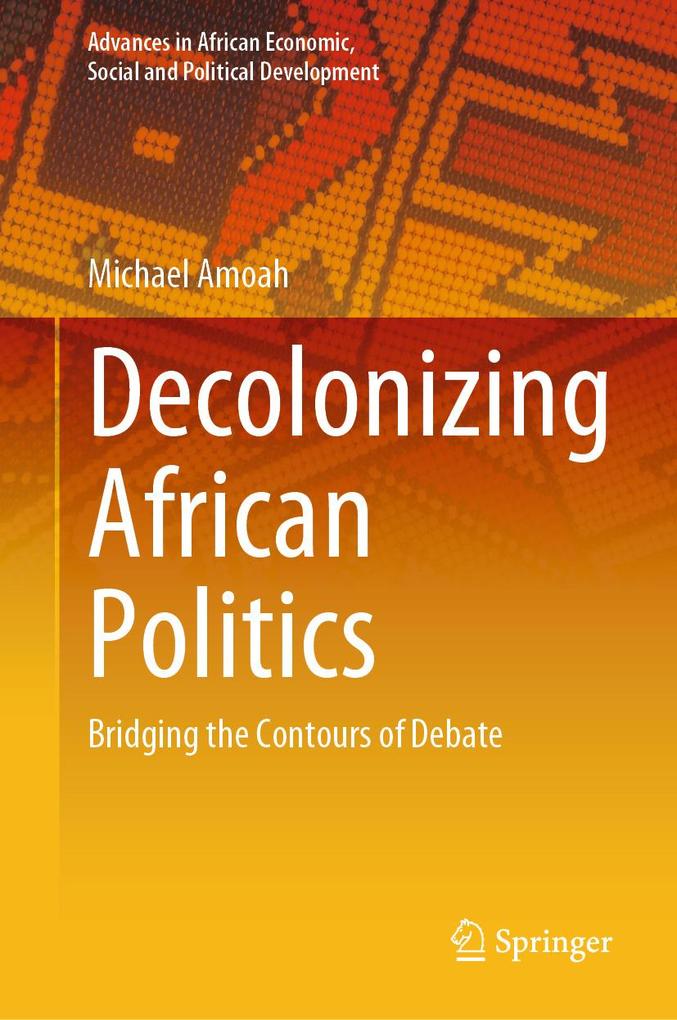
This book serves as a unique contribution to the curriculum decolonizing agenda currently trending in universities. It approaches Politics and International Relations from the postcolonial and decolonial perspectives with empirical rebuttals to existing imperial and neocolonial false narratives. It examines key concepts and topics which regularly feature when teaching or discussing Africa at universities, such as: nationhood and nationalisms; neo-patrimonialism; arbitrary borders and tribes; françafrique; superpower relations; relationships with China & Russia; South-South cooperation and collaborations; foreign interventions; global justice; global governance and reform of the UN Security Council. This book explores the etymologies of these concepts or topics and their terminological application to Africa while bringing fresh perspectives to the debate. It appeals to scholars and students of African politics and international relations, and functions as a graduate and advanced under-graduate pedagogical tool.
Inhaltsverzeichnis
Chapter 1. Introduction. - Chapter 2. Decolonizing the Concept of Nationhood. - Chapter 3. Decolonizing Neopatrimonialism. - Chapter 4. Decolonizing `Arbitrary Borders. - Chapter 5. Decolonizing the French Colonial Pact: From Anticolonial Wars of Independence to Presidential Extensions. - Chapter 6. Decolonizing Françafrique: Unravelling Françafrique and the Formation of the Alliance of Sahel States. - Chapter 7. Decolonizing Superpower Relations: Partnerships with China and Russia. - Chapter 8. Decolonizing Collaboration: Africa s South-South Collaborations. - Chapter 9. Decolonizing Global Governance: Realizing the Ezulwini Consensus. - Chapter 10. Conclusions.
Dr. Amoah s Decolonizing African Politics: Bridging the Contours of Debate is a very decent book for readers, who are interested in Africa s decolonization struggle, including upper-level college and university students, researchers and the general reader. The author, above all, should be applauded for the excellent research cum documentation, both of which make his 205-page book unique as well as very valuable. (Kwadwo S. Assensoh and Livingston A. Assensoh, African and Asian Studies, July 24, 2026)
This book is an enlightening resource for challenging stereotypical notions about Africa in lectures. It provides counterexamples from different parts of the world, particularly the West. Thus, I suggest this book to scholars and lecturers of politics, international relations, and African studies around the world to learn how to decolonize the curriculum. (Sinan Baran, African Studies Review, June 1, 2026)
Es wurden noch keine Bewertungen abgegeben. Schreiben Sie die erste Bewertung zu "Decolonizing African Politics" und helfen Sie damit anderen bei der Kaufentscheidung.











