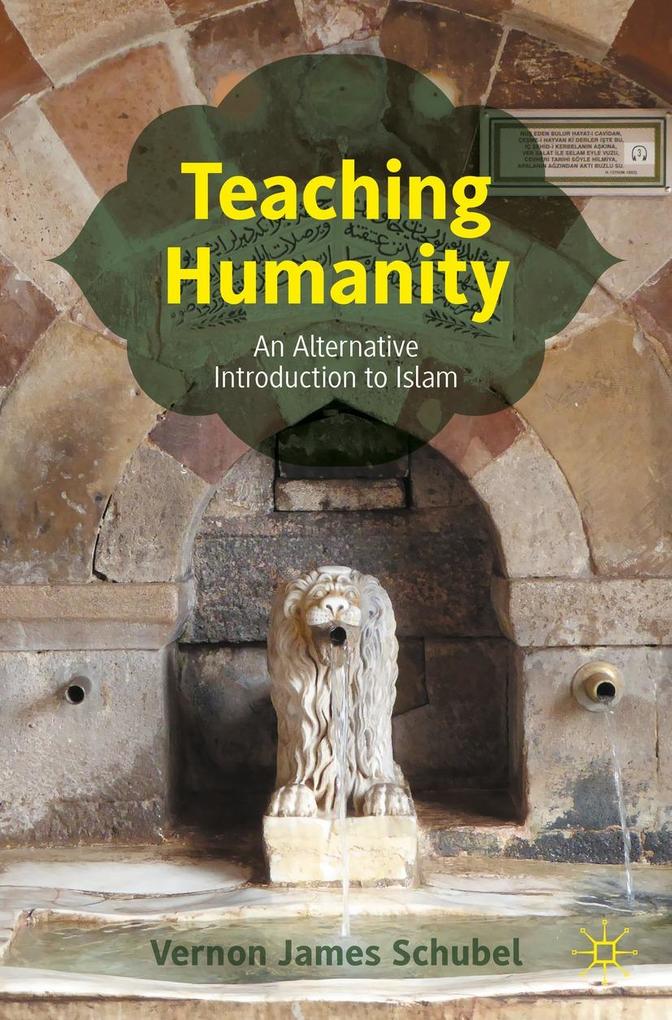
This book introduces Islam through a "humanistic" lens, by highlighting the affective traditions and expressions associated with Sufism and Shi'ism. While most introductory books emphasize the shari'a, and especially the "Five Pillars," as the primary defining characteristic of Islam, Vernon James Schubel provides an alternative introduction which instead underscores the importance of humanity and the human being within Islamic thought and practice. The book stresses the diversity of Islamic beliefs and practices, presenting them as varied responses to the shared multivalent concepts of tawhid (the unity of God), nubuwwa (prophecy) and qiyama (the Day of Judgment). Readers are introduced to essential aspects of Islam including the life of the Prophet Muhammad, the Qur'an, the development of the shari'a, and the emergence of the Sunni, Shi'a and Sufi traditions. The book concludes with a call to redefine "mainstream" Islam, as a religious tradition focused on the centrality of love and rooted in the importance of humanity and universal human virtues.
Inhaltsverzeichnis
1 Introduction: Teaching Humanity Islam as a Humanistic Tradition. - Islam as a Humanistic Tradition. - Defining Humanism and the Humanities. -
Orientalism
and the Study of Islam. - Islam as a Legalistic Tradition. - Three Men and an Elephant: Describing Islam. -
Islam: The Straight Path
, or Is It? . - Islam or Islam(s)? : Accounting for Islamic Diversity. - Talal Asad: Islam as a Discursive Tradition. - Shahab Ahmed and the Critique of Asad. - The Pre-Text . - The Con-Text : The Product of Engagement. - Islam as an Affective Tradition. - Challenging Textual Essentialism. - Moving Beyond the Text: There Is a Reason They Call It Folk Wisdom Teaching Humanity: An Alternative Introduction to Islam. - Questions for Discussion. -2 Islam s Diverse Paths, Part One: Patterns of Belief. - Defining Islam. - Islam s Diverse Paths. - Islam: A Man and A Book. - Islam: Unity in Diversity. -
Usul al-Din
: The Roots of Religion. -
Tawhid
: The Unity of God. - Mansur Al-Hallaj: The Secret of
Ana al-Haqq.
-
Nubuwwa
: Belief in Prophets. - A Brief Outline of the Life of the Historical Muhammad. - Following Muhammad: The Prophet as a Model for Later Generations
Qiyama
: Belief in the Day of Judgment. - Conclusion. - Questions for Discussion. - 3 Islam s Diverse Paths, Part Two: Patterns of Practice and Identity. -The Path of Law : The
Shari a. - Ibadat
and
Mu amalat
:
Shari a
as Ritual and Social Practice. -
Mu amalat
:
Shari a
as Social Practice. -
Shari a
: Islamic Law? . - The Path of Morality and Etiquette:
Akhlaq
and
Adab. -
Paths of Love:
Mahabba
and
Ishq. -
Walking the Path of Love: The Story of Layla and Majnun. - Islam s Diverse Communities: Shi a, Sunni, and Sufi. - The Force of History: From Saqifa to Karbala. - A Man and a Book: Accounting for Sunni and Shi i Islam. - Shi i Islam: The Path of Devotional Allegiance. - Shi i Islam s Diverse Paths. - Sunni Islam: The Islam of the
Sunna
and the Community. - Belief in the
Awliya Allah
: The Sufi Tradition. -
Wahdat al-Wujud
and the Sufi Tradition. - Conclusion: Islam as a Humanistic Tradition. - Questions for Discussion. - 4 Teaching Humanity: The Human Being as the Object and Means of Revelation in Islamic Piety. -Approaching the Qur an. - The Qur an as Sacred Presence. - The Form and Content of the Qur an. - Qur anic Verses: Affirmations of
Tawhid
and
Qiyama. -
Qur anic Verses: Practice and Ethics. - Qur anic Verses: Narratives. - Interpreting the Qur an. -
Muhkamat
and
Mutashabihat
Verses. - Teachers of Humanity: Prophets, Imams, and
Awliya
. -
Adam in the Qur an. - Iblis and Adam in the Qur an. - Mansur al-Hallaj and the Creation of Adam. - The Alevi Understanding of the Adam and Iblis Story. - The Narrative of Khidr and Musa. - Conclusion: Humanity in the Qur an. - Questions for Discussion. - 5 Patterns of Devotional Allegiance: God s Friends (
Awliya Allah
) and Perfected Persons (
al-Insan al-Kamil
). - Devotional Allegiance to the Prophet Muhammad. - Love and Devotional Allegiance to the Prophet Muhammad. - Love and Devotion for Ali b. Abu Talib. - Karbala: Shi i Islam s Spiritual Fulcrum. - Karbala as a
Meme. -
Karbala as a Root Paradigm. - Victor Turner on Human Nature:
Communitas
and Structure. - Etic and Emic. - Devotional Allegiance in the Sufi Tradition. - The Story of Baba Farid Shakr Ganj and Mullah Sahab. - Interpretation. - Ahmet Yesevi in the
Vilayetname. -
The Proclamation of the Praiseworthy Qualities of Hoca Ahmet Yesevi Hezretleri Analysis. - Conclusion. - Questions for Discussion. - 6 My
Qibla
Is a Man: Islam Beyond the
Shari a. -
Defining Alevilik. - The Nature of Alevi Religion. - Alevilik as Shi i Piety. - Alevilik as a Sufi Tradition. - The
Cem. -
The Origin of the
Cem
in the
Miraç
of the Prophet. - Contemporary Alevilik. - Urban
Cems
and
Cem Evis. -
Alevi Music and Performance. - The
Saz
and the Minaret. - Contemporary Alevi Literature. - Narratives from the
Vilayetname. -
The Narrative of the Lineage and Birth of Hac Bekta in the
Vilayetname. -
The
Vilayetname
as an Islamic Text. - The Narrative of Güvenç Abdal. - My
Qibla
is a Man: Islam Beyond the Law. - Questions for Discussion. - 7 Conclusion: Not an Excess of Religion, But a Lack of Humanity In Search of Mainstream Islam . - Radical Muslims and Muslim Extremists. - How to Write About Muslims. - Islam and Humanity. - The Reformers and Their Legacy. - In Search of Mainstream Islam. - I Created Everything for You and You for Me: An Alternative View of Islam. - Creating
Insan al-Kamil
: The End of Humanity. - Mainstream Islam and
Shari`a. -
Mainstream Islam and Modernity. - Conclusion. - Questions for Discussion. - Glossary. - Bibliography.