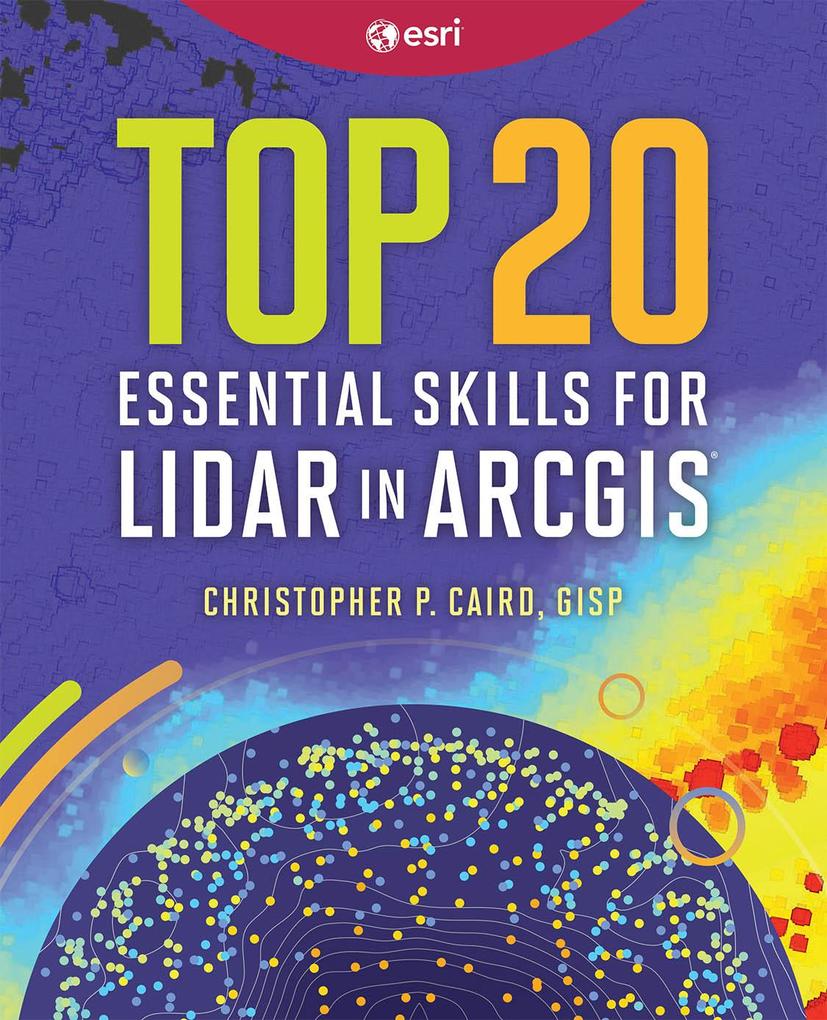
Through 20 step-by-step tutorials, gain the knowledge to understand, manage, analyze, and create immersive 3D products using lidar data.
Throughout Top 20 Essential Skills for Lidar, you'll discover a range of essential lidar skills and best practices for preparing and storing data, sharing methods, and rendering techniques. Each chapter presents a bite-sized, standalone tutorial with easy-to-follow steps, accompanied by tips and considerations that enhance your understanding of the underlying concepts.
Using 20 step-by-step tutorials you will explore how to:
- Assess lidar data properties and correct common errors
- Visualize lidar data and convert between data types
- Create final data products and maps
- Classify lidar data
- Assess point spacing and density
- Use constraints
- Apply manual and automated classification
- Calculate volume and other measurements
- Create 3D surfaces such as digital terrain models and digital surface models
- Extract features such as trees and buildings
- Create viewsheds
- Perform shadow analysis
- Apply raster functions
- Leverage deep learning
Whether you're new to lidar or looking to expand your skills, Top 20 Essential Skills for Lidar provides a practical and accessible resource for exploring lidar data sources, working in 3D, and creating data-driven outputs.
Inhaltsverzeichnis
Introduction to Lidar
Understanding Lidar
Visualizing Lidar data in ArcGIS Pro
Managing Lidar in ArcGIS Pro
Assessing Lidar quality
Data optimization
Classification processes of Lidar using ArcGIS Pro
Using pre-trained models for point classification
Training a model for point classification
Creating surfaces
Creating contours
Introduction to ArcGIS Pro analysis tools
Extracting objects from Lidar
Extract objects using deep learning
Other Lidar analysis workflows
Share Lidar point cloud data to a portal
Using Lidar data in web scenes
Share surfaces
Using indoor Lidar
Data resources and use cases