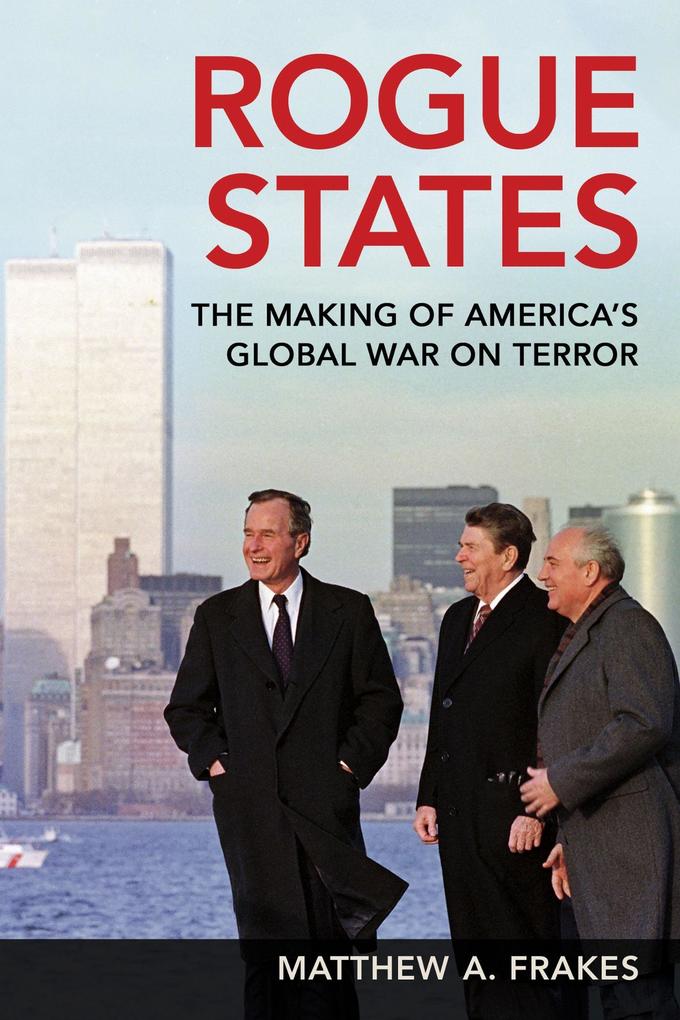
In Rogue States, Matthew A. Frakes reveals the connection between US national security strategy at the end of the Cold War and the beginning of the War on Terror. Throughout a series of crises from 1981 to 1991, the administrations of Ronald Reagan and George H. W. Bush recognized that emerging threats to global security – terrorism, regional aggression, weapons of mass destruction, and narcotics trafficking – converged into a single growing phenomenon that they eventually called "rogue states." In confronting Libya, Panama, and Iraq, Reagan and Bush created the strategies that drove US national security after 9/11.
Frakes argues that Reagan and Bush's improvised responses to crises of terrorism, aggression, and the proliferation of weapons of mass destruction – culminating in the Gulf War of 1991 – established a lasting enforcement role for the United States against rogue states in the post–Cold War world. The effort to redefine US national security around this threat created a new framework to guide the country's approach to global security after the Cold War – one that ensured after 9/11 that the War on Terror became a war on rogue states.