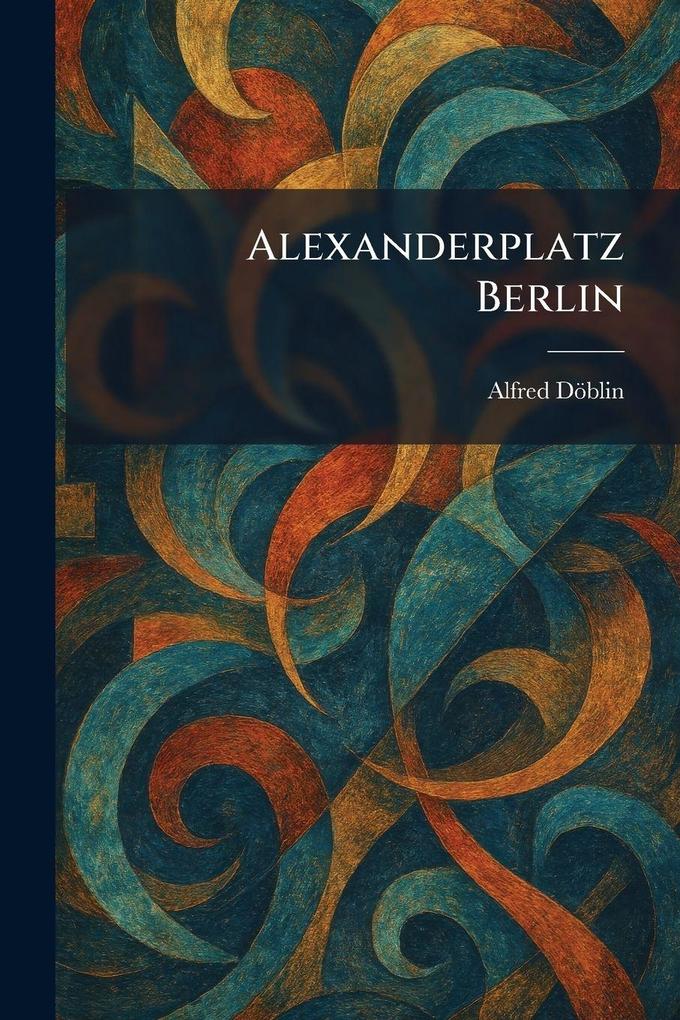
"Alexanderplatz Berlin" is a seminal masterpiece of modernism and one of the most significant novels of the 20th century. Set within the gritty, pulsating underworld of 1920s Berlin, the narrative follows Franz Biberkopf, an ordinary man recently released from prison. Vowing to remain "decent" and go straight, Biberkopf finds himself relentlessly tested by the chaotic forces of the city and the dark influence of the criminal underworld.
Alfred Döblin utilizes a revolutionary narrative style, blending montage, stream of consciousness, and an array of external texts-from weather reports to biblical parables-to capture the frantic energy of the metropolis. The city of Berlin itself emerges as a primary character, a labyrinthine beast that reflects the psychological fragmentation of its inhabitants. This epic work explores deep-seated themes of fate, redemption, and the struggle for dignity in an increasingly mechanized and indifferent world. "Alexanderplatz Berlin" remains a harrowing and essential portrait of the human condition during the twilight of the Weimar Republic, solidifying its status as a landmark of literary innovation.
This work has been selected by scholars as being culturally important, and is part of the knowledge base of civilization as we know it. This work was reproduced from the original artifact, and remains as true to the original work as possible. Therefore, you may see the original copyright references, library stamps (as most of these works have been housed in our most important libraries around the world), and other notations in the work.
This work is in the public domain in the United States of America, and possibly other nations. Within the United States, you may freely copy and distribute this work, as no entity (individual or corporate) has a copyright on the body of the work.
As a reproduction of a historical artifact, this work may contain missing or blurred pages, poor pictures, errant marks, etc. Scholars believe, and we concur, that this work is important enough to be preserved, reproduced, and made generally available to the public. We appreciate your support of the preservation process, and thank you for being an important part of keeping this knowledge alive and relevant.