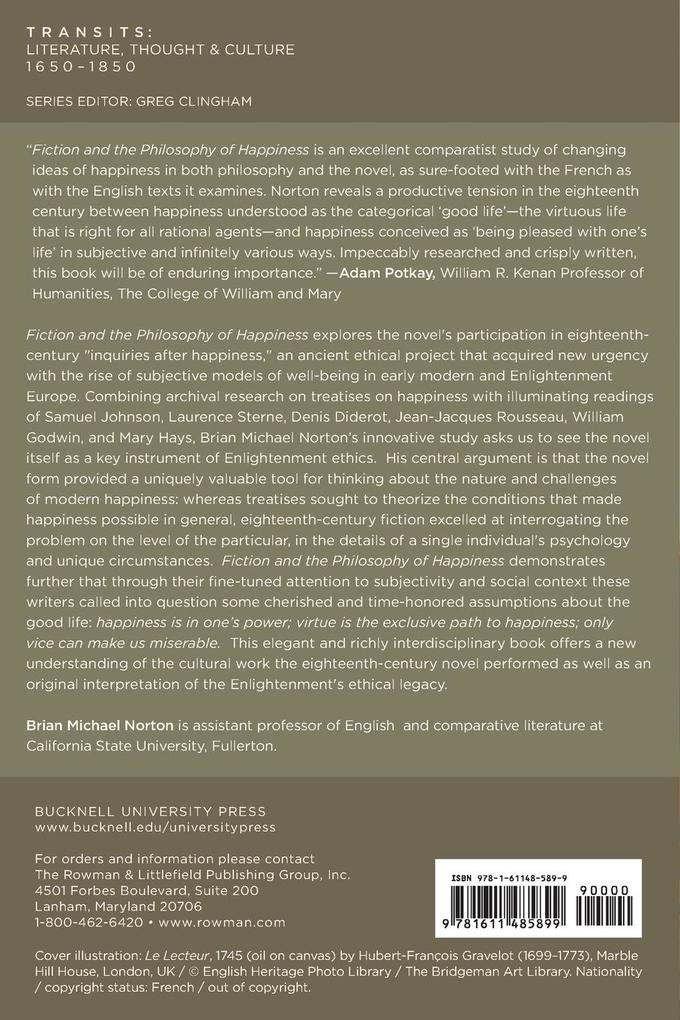
This book examines the eighteenth-century novel in the context of emerging theories of happiness in early Enlightenment Europe. This important and richly interdisciplinary book offers both a new understanding of the cultural work the eighteenth-century novel performed, as well as an original interpretation of the Enlightenment’s ethical legacy.
Inhaltsverzeichnis
Contents
Introduction: After the Summum Bonum: Eighteenth-Century
Enquiries after Happiness
1. The Moral in Phutatorius's Breeches: Stoicism, Subjectivism
and the Possibilities of Happiness in Tristram Shandy
2. "Vous croyez que le même bonheur est fait pour tous":
Ethics and Singularity in Le Neveu de Rameau
3. Tragic Eudaimonism: Social Contradictions and the
Problem of Happiness in Rousseau's Julie
4. The Politics of Happiness: Caleb Williams, Political Justice
and the Nature of Human Goods
5. Rethinking Autonomy: Emma Courtney, Feminist Ethics
and the Question of Independence
Conclusion: The Art of Life in the Age of Enlightenment
Bibliography
Index
About the Author