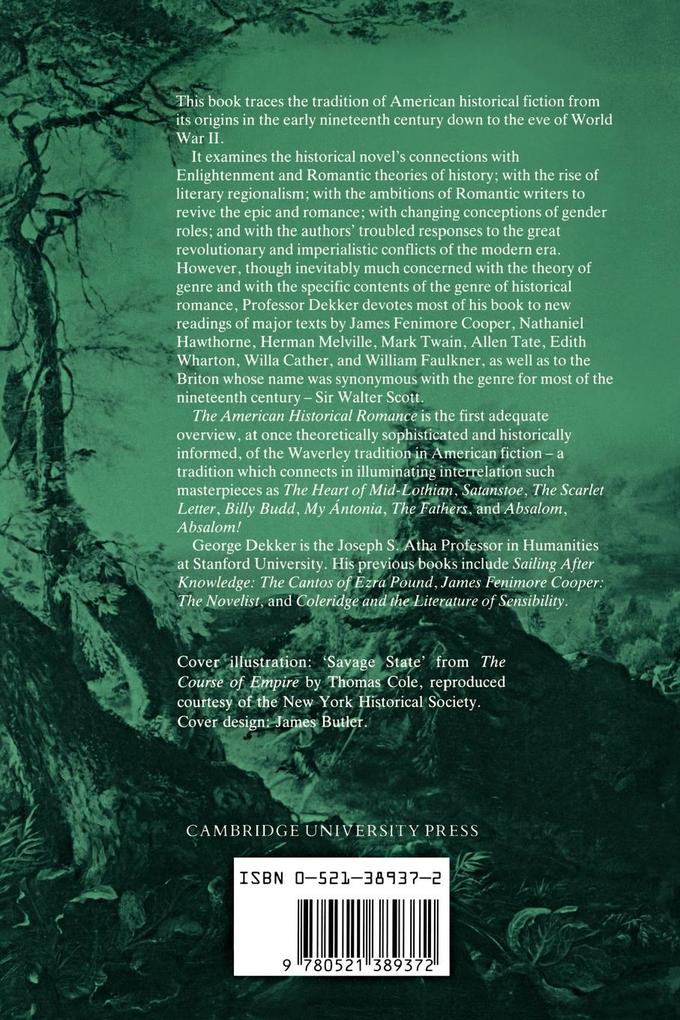
Dekker traces the American historical novel from its origins in the early 1800s to the beginning of World War II, examining the genre's connections with Enlightenment and Romantic theories of history, the rise of literary regionalism, the ambitions of Romantic writers to revive the epic and romance, changing gender roles, and individual authors' troubled responses to the modern era's great revolutionary and imperialistic conflicts. Though concerned with the historical romance's development, Dekker devotes most of this book to new readings of major texts by James Fenimore Cooper, Nathaniel Hawthorne, Herman Melville, Mark Twain, Allen Tate, Edith Wharton, Willa Cather, and William Faulkner, as well as to the Briton whose name is synonymous with the genre, Sir Walter Scott.
Inhaltsverzeichnis
Preface; 1. the American historical romance: a prospectus; 2. The Waverley-model and the rise of historical romance; 3. Historical romance and the stadialist model of progress; 4. The regionalism of historical romance; 5. Hawthorne and the ironies of New England history; 6. Melville: the red comets return; 7. The hero and heroine of historical romance; 8. The historical romance of the South; 9. Retrospect: departures and returns; Notes; Index.