Bücher versandkostenfrei*100 Tage Rückgaberecht***Abholung in über 100 Filialen

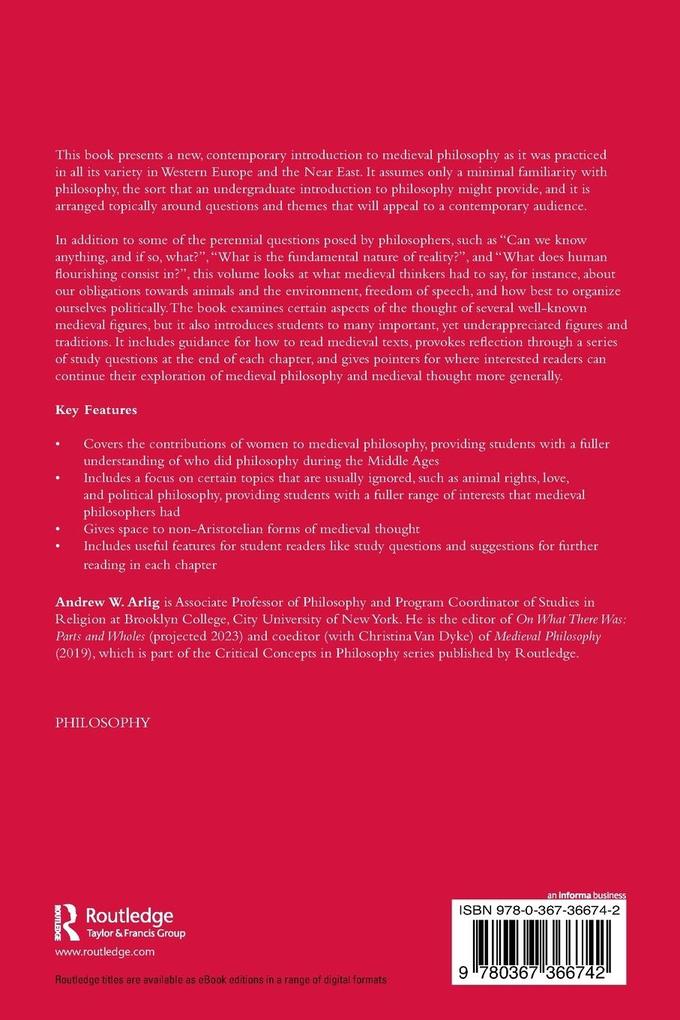
This book presents a new, contemporary introduction to medieval philosophy as it was practiced in all its variety in Western Europe and the Near East. It assumes only a minimal familiarity with philosophy, the sort that an undergraduate introduction to philosophy might provide, and it is arranged topically around questions and themes that will appeal to a contemporary audience.
In addition to some of the perennial questions posed by philosophers, such as "Can we know anything, and if so, what?", "What is the fundamental nature of reality?", and "What does human flourishing consist in?", this volume looks at what medieval thinkers had to say, for instance, about our obligations towards animals and the environment, freedom of speech, and how best to organize ourselves politically. The book examines certain aspects of the thought of several well-known medieval figures, but it also introduces students to many important, yet underappreciated figures and traditions. It includes guidance for how to read medieval texts, provokes reflection through a series of study questions at the end of each chapter, and gives pointers for where interested readers can continue their exploration of medieval philosophy and medieval thought more generally.
Key Features
Inhaltsverzeichnis
"An excellent achievement. The volume serves as a contemporary introduction both in terms of its tone, which is fresh and wonderfully free of jargon, and in terms of its material, which takes a wholly new and inspiring approach to what the medieval canon should look like."
Robert Pasnau, University of Colorado, Boulder
Es wurden noch keine Bewertungen abgegeben. Schreiben Sie die erste Bewertung zu "Medieval Philosophy" und helfen Sie damit anderen bei der Kaufentscheidung.











