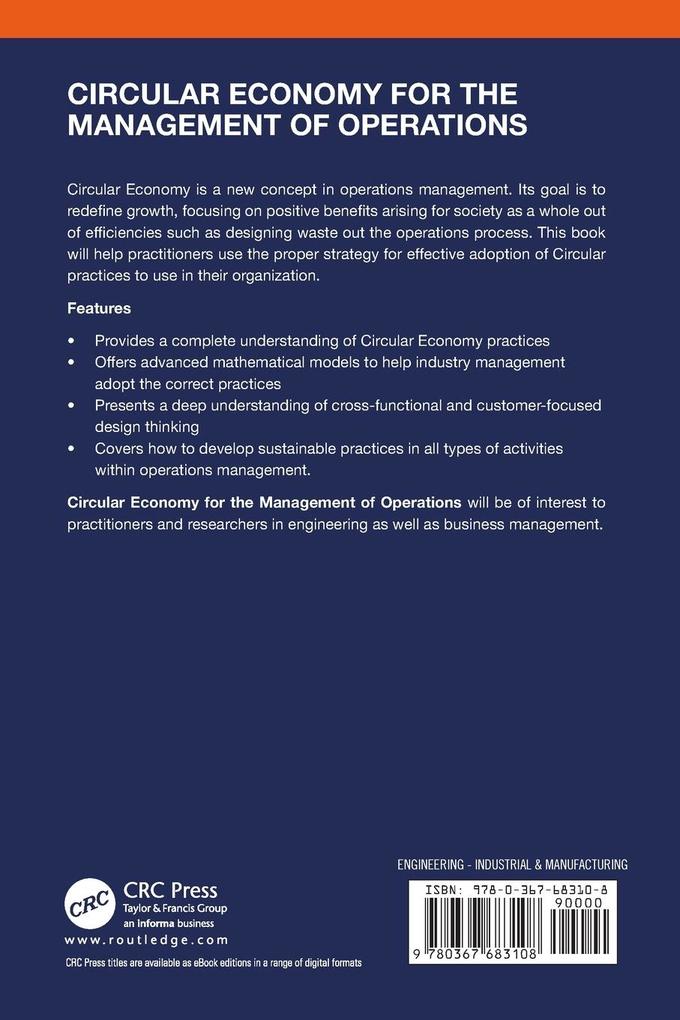
Circular Economy is a new concept in operations management. Its goal is to redefine growth, focusing on positive society-wide benefits such as designing waste out the operations process. This book will help practitioners use the proper strategy for effective adoption of Circular practices to use in their organization.
Inhaltsverzeichnis
Chapter 1 The Conceptual Model Framework for the Role of Human Resources in the Adoption of the Circular Economy: A Content Analysis Approach
Chapter 2 Closing Loops, Easing Strains: Industry 4. 0's Potential for Overcoming Challenges of Circularity in Manufacturing Environments
Chapter 3 Reporting for New Business Models: The Challenge to Support the Circular Economy
Chapter 4 Sustainability Through Green Manufacturing Systems: An Applied Approach
Chapter 5 Circular Economy: Assessing a Progress of Resources Efficient Practices in Hotel Industry
Chapter 6 A Governance-Practice Framework for Remanufacturing in the Indian Automobile Sector
Chapter 7 Fuzzy Global Criterion Method for Solving Multiobjective Sustainable Supplier Selection Problem
Chapter 8 Sustainability and OEE Gains in Manufacturing Operations Through TPM
Chapter 9 A Multi-Criteria Decision-Making Model for Agricultural Machinery Selection
Chapter 10 Challenges in Implementing Green Supply Chain Management in SMEs: A Case Study of a South Korean Company
Chapter 11 Drivers for Adoption of Green Logistics as a Means to Achieve Circular Economy by Organized Retail Sector
Chapter 12 Framework for Sustainable Food Systems: Holistic Mitigation and Adaptation
Chapter 13 Supply Chain Network Design Models for a Circular Economy: A Review and a Case Study Assessment