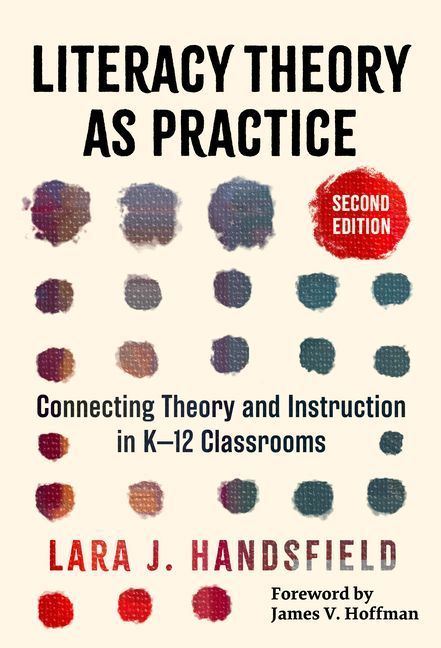
Integrate influential literacy theoriesÑfrom foundational cognitive insights to socially just practicesÑin multilingual classrooms with detailed classroom vignettes. Bridging theory and practice, the work explores debates on neuroscience, social-emotional learning, and digital literacies within todayÕs evolving educational landscape.
This is both a comprehensive overview of major theoretical developments in literacy AND a teaching guide with in-depth classroom examples of how literacy can be used in daily classroom practice.
In this expanded and completely updated second edition, Handsfield introduces the most influential theories and models of reading and literacy-from cognitive and information-processing theories that underpin foundational skills to social constructionist and critical theories that support socially just instructional practices in today's post-digital landscape. Focusing on how these theories connect with different curricular approaches (K-12), the book shows how they both shape and are shaped by everyday literacy practices in classrooms.
Readers will find detailed vignettes of classroom practice explored from various theoretical standpoints, illuminating how theory is brought to life in the classroom. Substantial attention is devoted to multilingual classrooms and communities, engaging with current sociopolitical issues in literacy curricula, and literacy teaching in the post-digital age. Chapters contain key questions for further exploration and user-friendly inset discussions that explore complex terminology and connect literacy theory to current debates and world events.
New for the Second Edition!
- Examination of theories and practices related to the Science of Reading movement.
- Addition of the Active View of Reading and Positioning Theory.
- New and revised vignettes focused on translanguaging practices and student and teacher uses of generative AI in literacy teaching and learning across the disciplines.
- New and revised inset discussions highlighting recent insights from neuroscience, knowledge-building, and intersections between literacy instruction and social-emotional learning.
Inhaltsverzeichnis
ContentsForeword James V. Hoffman ix
Acknowledgments xiii
1. Introduction 1
Conceptualizing Theory 1
Situating Praxis Within a Conceptual Continuum 5
What’s New in the Second Edition? 7
Content and Organization of This Book 10
PART I: INTRODUCTION TO THEORETICAL FRAMES OF READING AND LITERACY
2. Correspondence Theories 17
Grounding Curricular Model: UFLI Foundations 18
Behaviorism 19
Cognitive/Information-Processing Theories 23
Stage Theories of Word Recognition and Spelling Development 37
Concluding Thoughts 39
3. Coherence Theories, Take 1: Cognitive Constructivism 41
Foundations of Cognitive Constructivist Theories 42
Grounding Curricular Model: Transactional Strategies Instruction 43
Schema Theory 45
Psycholinguistic Theory 47
Construction–Integration Model 52
Transactional/Reader Response Theory 54
Concluding Thoughts 59
4. Coherence Theories, Take 2: Social Constructivism 61
Vygotsky’s Impact on Teaching and Learning 61
Grounding Curricular Model: Lucy Calkins’s Units of Study for Teaching Writing 64
Sociocultural-Historical Theory 66
Sociolinguistic Theory 70
Emergent Literacy Theory 74
Concluding Thoughts 78
5. Coherence to Incoherence: Social Constructionist Theories 80
Social Constructionism 81
Grounding Curricular Model: Youth Participatory Action Research 84
Critical Literacy Theory 86
Digital and Postdigital Literacy Theories 89
Positioning Theory 96
Critical Race Theory 99
Concluding Thoughts 106
PART II: EXPLORING PRAXIS AND BRINGING THEORIES TO LIFE
6. Cracking the Code: Skills Instruction and Developing Concepts of Literacy 111
Skills Instruction Across the K–12 Grade Span 111
Word Sorting in a 3rd-Grade Multilingual Classroom 113
Making Valentines at Home From Pre-K to 1st Grade 120
Manipulating Sentences in a 9th-Grade English Class 124
7. Constructing Meaning With Texts 131
Fluency, Vocabulary, and Comprehension Instruction 131
Fluency Instruction With a 3rd-Grade Reader in a One-on-One Tutoring Context 135
Strategic Reading and Word Identification in a Literature Discussion Group 139
8. Literature Discussion, Response, and Critique 149
Literature Discussion, Response, and Critique in K–12 Classrooms 149
Responding to Literature About Civil Rights in a 1st-Grade Classroom 151
Literature Discussion in an 11th-/12th-Grade Modern World Literature Class 155
Stepping Into Another’s Shoes in a 6th-Grade Language Arts Classroom 160
9. Writing and Writing Development: Authoring Texts, Authoring Lives 168
Writing Instruction in K–12 Classrooms 168
Small Moments Writing in a 1st-Grade Monolingual Classroom 170
Autobiographical Writing in a 4th-Grade Bilingual Classroom 176
Critical Race Theory 187
Digital and Postdigital Theories of Literacy 187
10. Disciplinary Literacies in the Content Areas 190
Teaching Disciplinary Literacies 191
Charting Plant Growth in a 4th-Grade Bilingual Classroom 192
Researching Japanese American Internment in a Culturally Diverse 10th-Grade History Class 197
Koaligators and Squirriélagos: Literature-Based STEM Inquiry in a 5th-Grade Classroom 204
The Active View of Reading 208
Sociolinguistic Theory 209
Postdigital Theory 210
11. Teacher Inquiry and Praxis 212
One Teacher’s Pedagogical and Theoretical Shifts Over Time 212
Teacher Inquiry 216
Concluding Thoughts: Praxis and Useful Inquiry 220
References 223
Index 247