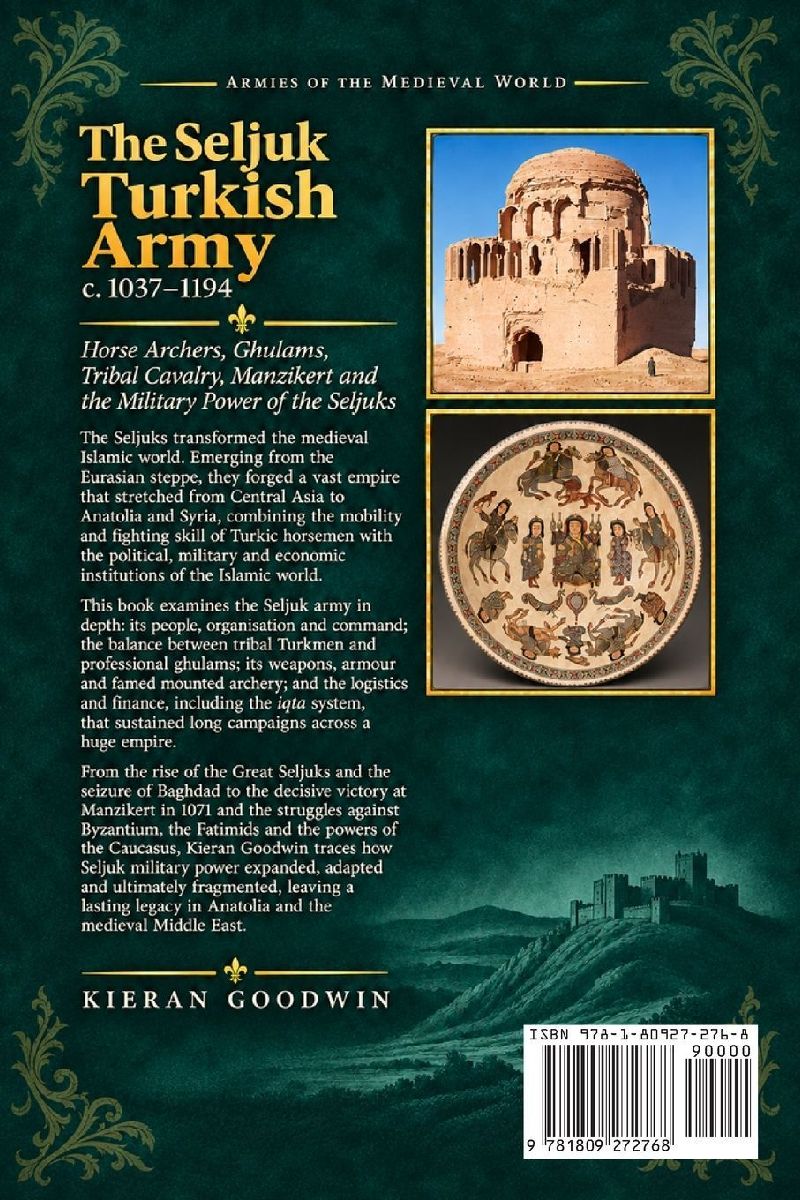
A handful of mounted warriors could cross vast distances, strike with devastating speed and reshape the fortunes of empires. But behind the Seljuks' extraordinary expansion lay an intricate world of military households, tribal loyalties, horses, money and command. The Seljuk Turkish Army, c. 1037-1194 takes the reader from the Oghuz steppe to the imperial cities of Iran and Iraq, revealing how the Great Seljuks combined mobile Turkic warfare with the resources and institutions of the medieval Islamic world. Kieran Goodwin examines the soldiers who made this empire possible, the weapons they carried, the campaigns they fought and the political system that sustained their power. Inside, discover:The men behind the army: Turkmen tribal horsemen, elite ghulams, military households, amirs and the different obligations that bound them to the sultan. The realities of mounted warfare: composite bows, armour, remounts, reconnaissance, feigned retreats and the difficult task of coordinating a mobile army in battle. The machinery of imperial power: the iqta revenue system, pasture and fodder requirements, campaigning across harsh terrain, sieges and the control of fortified cities. The campaigns that defined an era: Dandanqan, the seizure of Baghdad, Manzikert in 1071, the crisis at Qatwan and the rebellions that fractured Seljuk authority. The Battle of Manzikert receives particular attention, with its strategic setting, opposing armies, battlefield decisions and the turbulent developments that followed in Anatolia. The narrative also explores a less familiar paradox: the tribal military traditions that helped create Seljuk power could challenge the authority of its greatest sultans. Written with historical precision and a clear, engaging narrative, this volume brings together weapons, tactics, logistics, politics and the experience of soldiers to explain how the Seljuk army functioned, how it fought and how it changed. An absorbing addition to Armies of the Medieval World for military-history enthusiasts, collectors and readers of the medieval Middle East.