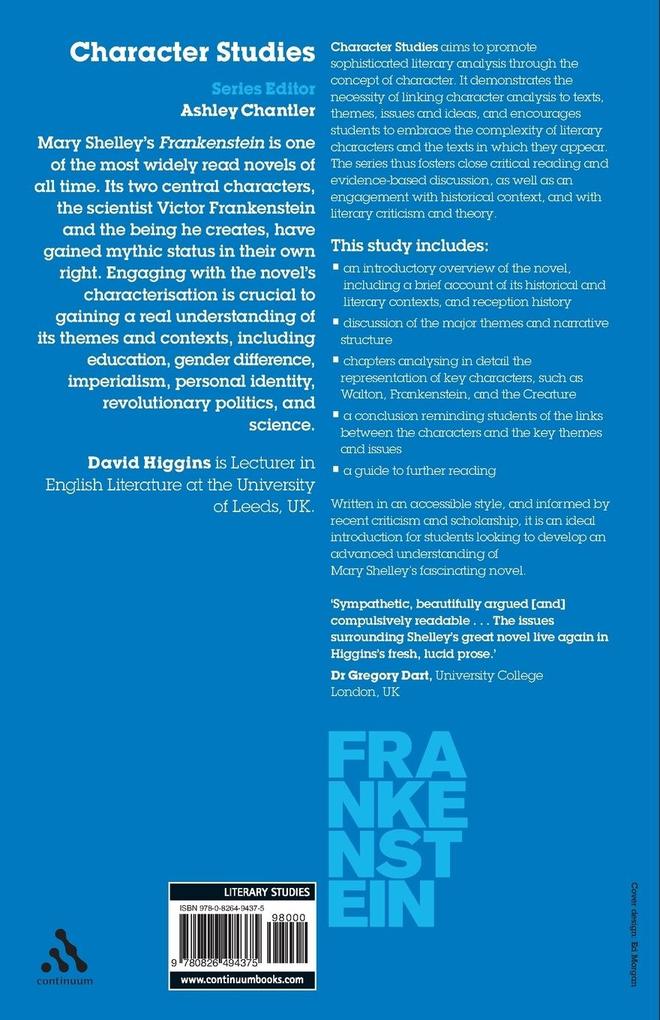
Mary Shelley's Frankenstein is one of the most widely read novels of all time. Its two central characters, the scientist Victor Frankenstein and the being he creates, have gained mythic status in their own right. Engaging with the novel's characterization is crucial to gaining a real understanding of its themes and contexts, including education, gender difference, imperialism, personal identity, revolutionary politics, and science.
This study includes: an introductory overview of the novel, including a brief account of its historical and literary contexts; its reception history; discussion of the major themes and narrative structure; detailed analysis of, the representation of main characters, such as Walton, Frankenstein, and the creature; and a conclusion reminding students of the links between the characters and the key themes and issues.
Inhaltsverzeichnis
Series Editor's Preface
Acknowledgements
1. Introduction: An Overview of Frankenstein
2. Walton the Explorer
3. Frankenstein the Scientist
4. Constructing a Self: The Creature's Narrative
6. Conclusion
Appendix: Characterisation in the 1831 Edition
Guide to Further Reading
Bibliography
Index