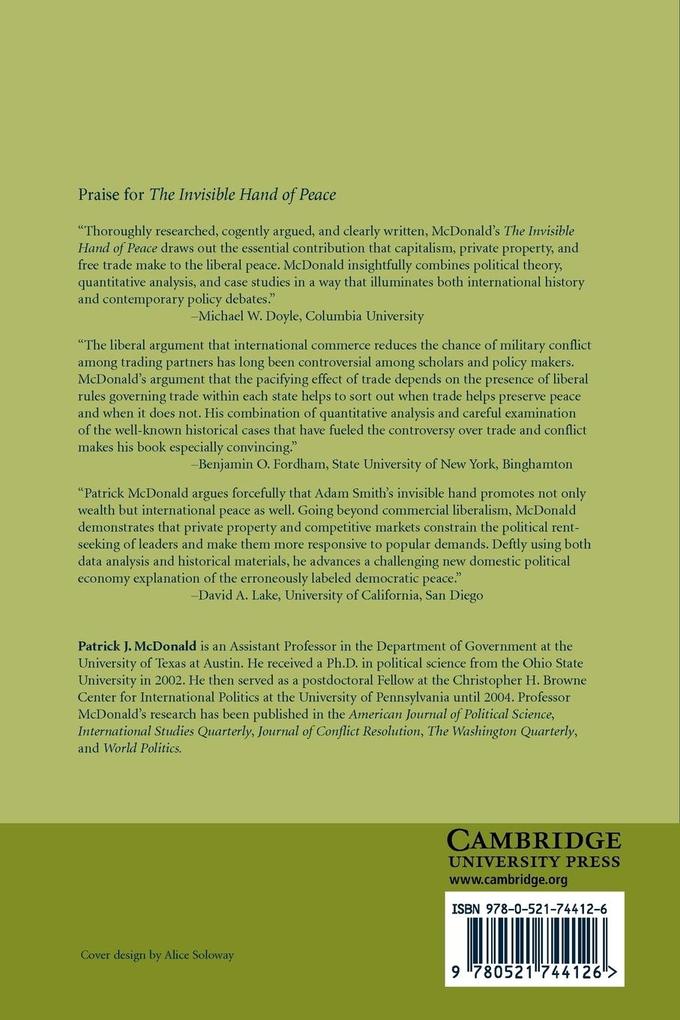
'Thoroughly researched, cogently argued, and clearly written, McDonald's The Invisible Hand of Peace draws out the essential contribution that capitalism, private property, and free trade make to the liberal peace. McDonald insightfully combines political theory, quantitative analysis, and case studies in a way that illuminates both international history and contemporary policy debates.' Michael W. Doyle, Columbia University 'The liberal argument that international commerce reduces the chance of military conflict among trading partners has long been controversial among scholars and policy makers. McDonald's argument that the pacifying effect of trade depends on the presence of liberal rules governing trade within each state helps to sort out when trade helps preserve peace and when it does not. His combination of quantitative analysis and careful examination of the well-known historical cases that have fuelled the controversy over trade and conflict makes his book especially convincing.' Benjamin O. Fordham, State University of New York, Binghamton 'Patrick McDonald argues forcefully that Adam Smith's invisible hand promotes not only wealth but international peace as well. Going beyond commercial liberalism, McDonald demonstrates that private property and competitive markets constrain the political rent-seeking of leaders and make them more responsive to popular demands. Deftly using both data analysis and historical materials, he advances a challenging new domestic political economy explanation of the erroneously labeled democratic peace.' David A. Lake, University of California, San Diego