The first comprehensive study of the history of the 17th-dentury Sabbatarian movement.
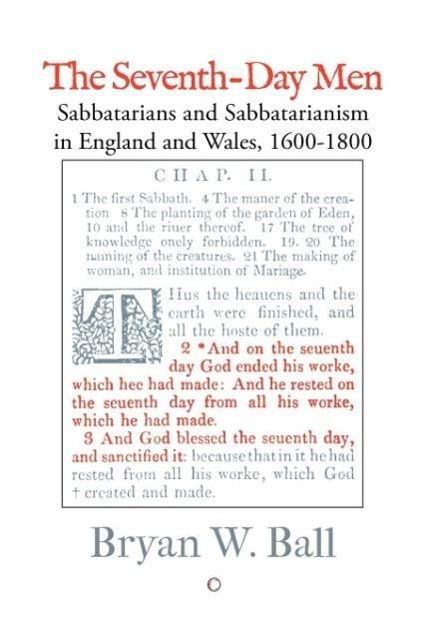
The Seventh-day Men' was a title given by contemporaries in the seventeenth and eighteenth centuries to an emerging body of Christians who observed Saturday, rather than Sunday, as the divinely appointed day of rest and worship. This is an extensively revised edition of the first fully documented account of the Sabbatarian movement and how it spread over England and Wales in the two centuries following the Reformation. Drawing on many rare manuscripts and printed works, Dr Ball provides clear evidence that this Christian movement was far more widespread than is often recognized, appearing in more than thirty counties. The author analyses the movement by tracking down its origins as far back as the Celtic tradition, showing its first appearance as 'modern' Sabbatarianism around 1402, and finally exploring its decline in the eighteenth century. As the first comprehensive study of the subject, this book establishes this movement as a significant strand of thought in the history of English Nonconformity, with considerable influence on the religious life of the period. The first comprehensive study of the history of the Sabbatarian movement in England and Wales. An invaluable source for church historians and all those interested in the religious developments of the early modern period.
Inhaltsverzeichnis
Illustrations
Abbreviations
Introduction to the Second Edition
Introduction
1. Precedents and Antecedents
2. John Traske and Theophilus Brabourne
3. The Mill Yard Church
4. The London Calvinistic Sabbatarian Churches
5. The South and South-West
6. The Chilterns and the Thames Valley
7. The Cotswolds and the Severn Valley
8. South Wales and the Borders
9. East Anglia
10. The Northern Counties
Conclusion
Appendices
I. Ireland
II. Notes on Supposed Sabbatarian Congregations, 1650-1750
III. The More-Chamberlen Church Reconsidered
IV. An Annotated Chronological Bibliography of Seventh-day Literature to 1750
V. Distribution of the Sabbatarian Movement to 1800 by Counties
VI. Additional Notes for the Second Edition
Bibliography for the First Edition
Bibliography for the Second Edition
Index of Places
Index of Persons
General Index