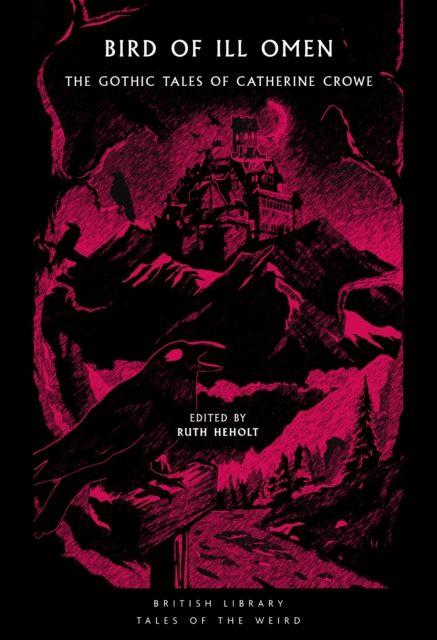
Coinciding with renewed academic interest in Crowe's important influence on the English Gothic tradition and the development of the "real" ghost story, this anthology shines a spotlight on a pioneering writer whose work shaped Victorian supernatural fiction but whose name has remained in the shadows for too long.
Showcasing Crowe's fascination with Gothic tropes including vampirism, mesmerism, and lycanthropy, the collection features "A Story of a Weir-Wolf", widely recognized as the first English werewolf story penned by a woman.
When morning broke, the ravages of this strange visitant were but too visible - graves had been opened, and the remains of the dead, frightfully torn and mutilated, lay scattered upon the earth.
A village is driven to murderous hysteria by a wolf walking among them. In the dead of night, a sleepwalking monk reenacts a shocking act of violence witnessed in childhood. A lycanthropist draws closer to a monstrous truth while investigating a spate of grisly grave robberies.
During the nineteenth century, Catherine Crowe's name was synonymous with haunting accounts of "real" ghost stories, glimpses of the "night side of nature" and well-wrought Gothic tales. Her popularity rivaled that of Charles Dickens, earning her a devoted Victorian readership.
Expertly edited by Crowe scholar Ruth Heholt, this collection brings together Crowe's distinctive journalistic accounts ghost sightings alongside her Gothic stories originally published in popular periodicals. Together, they showcase the remarkable range or originality of one of the Victorian era's most compelling--and overlooked--storytellers.