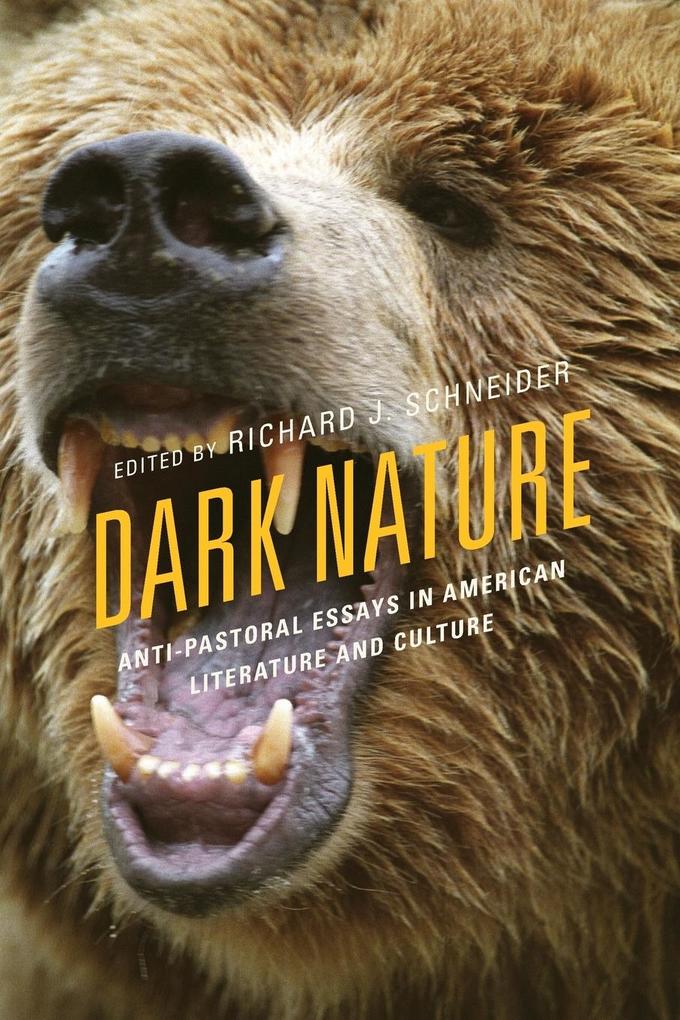
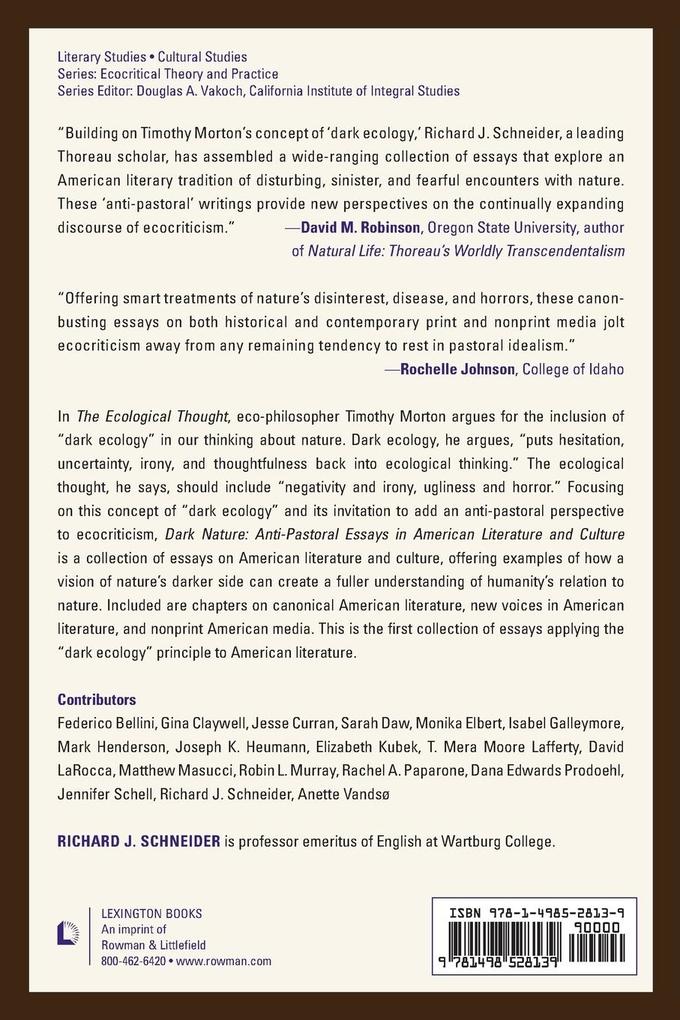
Focusing on the concept of "dark ecology" and its invitation to add an anti-pastoral perspective to ecocriticism, this collection of essays on American literature and culture offers examples of how a vision of nature’s darker side can create a fuller understanding of humanity’s relation to nature.
Inhaltsverzeichnis
Table of Contents
Richard J. Schneider, "Introduction"
Dark Nature and the American Canon
1.Gina Claywell, "'Famine is a Frightful Monster': Constructing Nature in Colonial Road Trips by Sarah Kemble Knight and William Byrd II"
2.Elizabeth Kubek, "'Passage into New Forms': The Negative Ecologies of Charles Brockden Brown"
3.Mark Henderson, "Dutchmen on the Brink: The Ghost Ship as Avatar of Dark (American) Nature in Poe's 'MS. Found in a Bottle.'"
4.Jesse Curran, "Thoreau's Week and the Work of the Eco-lament"
5.Frederico Bellini, "The Gnostic Dark Side of Nature in Herman Melville and Cormac McCarthy: Carrying the Fire out of Arcadia"
6.Jennifer Schell, "Fiendish Fumaroles and Malevolent Mud Pots: The EcoGothic Aspects of Owen Wister's Yellowstone Stories"
7.Monika M. Elbert, "Frontiersmen, Robber Barons, Architects, and the Darkening Aesthetics of Nature in Willa Cather's A Lost Lady"
Dark Nature and New Voices
8.Richard J. Schneider, "The Dark Side of Two Nature Writing Genres: Nature Noir