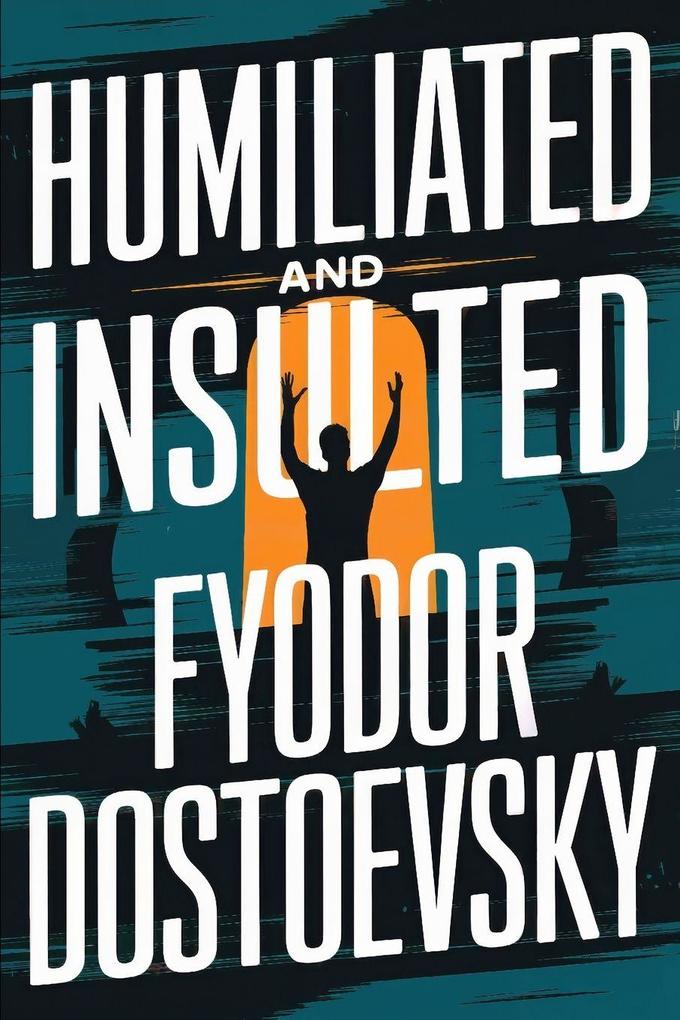
Love that destroys. Wealth that corrupts. And suffering elevated to philosophy.
Ivan Petrovich is a struggling writer in St. Petersburg, tubercular and impoverished, surviving on the margins of literary life. He loves Natasha Ikhmeneva hopelessly-she considers him merely a friend. She has abandoned her respectable family to live with Prince Alyosha Valkovsky, the charming but weak son of a predatory aristocrat who has systematically destroyed the Ikhmenev family through fraud and manipulation.
Natasha has sacrificed everything for Alyosha: family, reputation, security, dignity. Yet Alyosha, while genuinely fond of her, is too shallow to reciprocate adequately. He plans to marry a wealthy heiress while expecting Natasha to accept this betrayal magnanimously. Rather than leaving him, Natasha decides to facilitate his marriage-reasoning that true love demands she prioritize his happiness over her own dignity.
Meanwhile, Ivan rescues Nelly, a dying orphan girl whose mysterious past gradually reveals connections to the Valkovsky family's crimes. Her grandfather has been ruined by Prince Valkovsky senior. Her mother was seduced and abandoned by him, driven to prostitution and early death. Nelly herself is dying of consumption, traumatized by cruelty she witnessed but cannot fully articulate.
As Ivan navigates between these suffering figures-attempting reconciliations, uncovering secrets, witnessing degradations he cannot prevent-Prince Valkovsky senior articulates his philosophy: sophisticated nihilism that acknowledges no moral constraints, pursues pleasure and advantage without guilt, manipulates others as tools, and mocks conventional morality as hypocrisy masking universal selfishness.
Fyodor Dostoevsky wrote this immediately after returning from Siberian exile-a decade of prison camp and compulsory military service following his arrest and mock execution. The novel bridges his early sentimental realism and the psychological depth of his mature masterpieces. It contains melodramatic plotting, excessive coincidence, and Victorian sentimentality that he would later transcend. Yet within these conventional forms, one detects the developing genius: the psychological penetration, the obsession with suffering and humiliation, the philosophical seriousness struggling to emerge from melodrama.
Contemporary critics recognized its emotional power while noting its structural weaknesses. Modern readers will likely find it dated compared to Dostoevsky's later works. Yet those willing to accept its Victorian conventions will discover a novel of genuine intensity-flawed but fascinating, showing a major writer finding his voice while still constrained by the traditions he would soon revolutionize.
The insulted and injured-not merely poor but systematically degraded, reduced to objects for others' use. And the question: can love and forgiveness redeem what power and cruelty have destroyed?