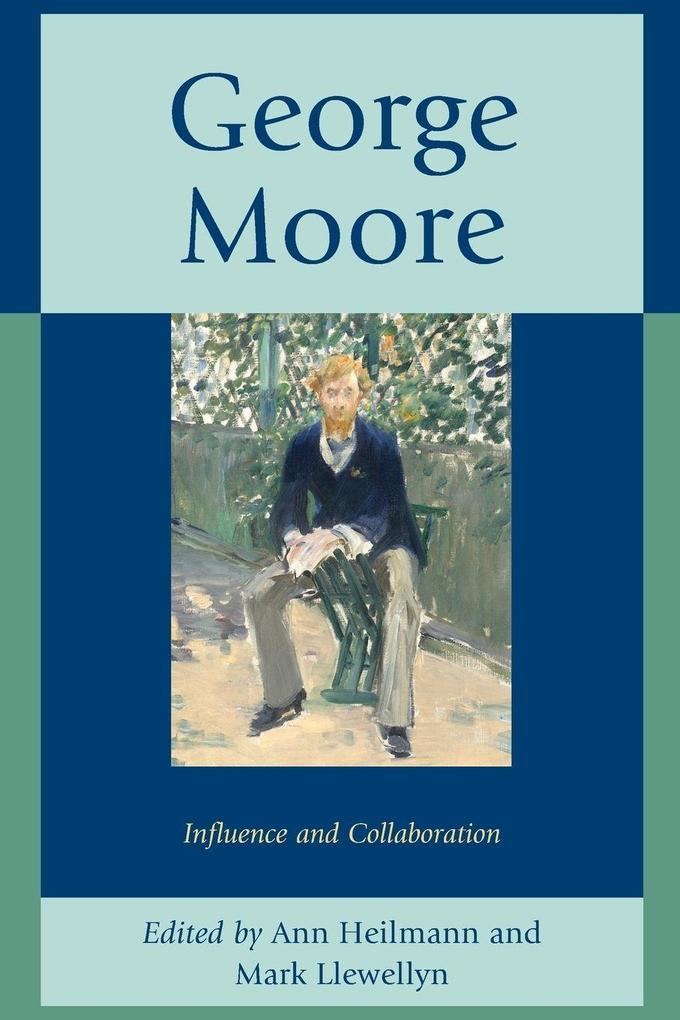
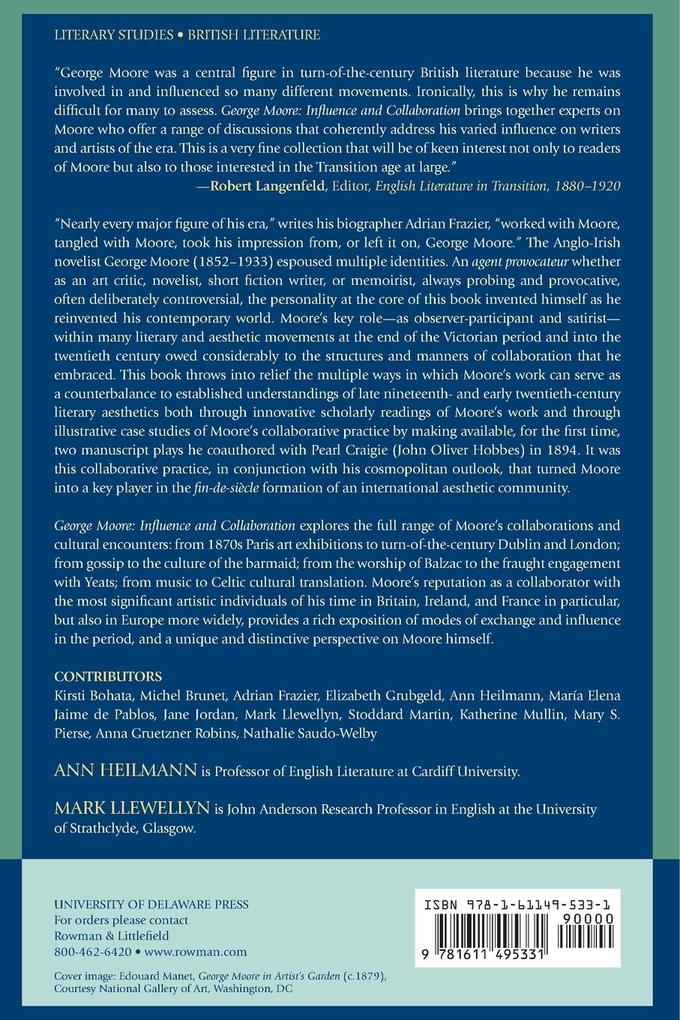
George Moore: Influence and Collaboration explores in sustained form for the first time the nature of Moore’s interactions with other European writers and artists of the fin de siècle. This book explores the full range of Moore’s collaborations and cultural encounters: from 1870s Paris art exhibitions to turn-of-the-century Dublin and London.
Inhaltsverzeichnis
Contents
Acknowledgments
Contributors
Introduction
Ann Heilmann and Mark Llewellyn
Part One: Influence
Chapter 1: The Fin de Siècle Meets French Realism: Moore, Balzac and the Peculiarity of Writers Adrian Frazier
Chapter 2: "A Visit to an Impressionist Exhibition" in Moore's Confessions of a Young Man Anna Gruetzner Robins
Chapter 3: Reading the Notes, Knowing the Score
Mary S. Pierce
Chapter 4: "Literature at Nurse": George Moore, Ouida and Fin-de-Siècle Literary Censorship
Jane Jordan
Chapter 5: "The sort of girl I'd like to see behind the bar at the King's Head": Barmaids and Censorship in George Moore
Katherine Mullin
Chapter 6: Alice Barton: A Portrait of the Artist as a Young (New) Woman?
Ann Heilmann and María Elena Jaime de Pablos
Chapter 7: "Not fitted for marriage": "Mildred Lawson" and the New Woman
Nathalie Saudo-Welby
Chapter 8: Gossip, Art and the Public Secret: Moore on his Contemporaries
Elizabeth Grubgeld
Chapter 9: Readers, Writers and Friends: George Moore and John Eglinton
Michel Brunet
Chapter 10: Celtic Cousins? George Moore's The Untilled Field and Caradoc Evans's My PeopleKirsti Bohata
Chapter 11: Moore, Wagnerism, and the Shape of the Later Career
Stoddard Martin
Part Two: Collaboration
Co-authorship, Desire and Conflict: Introduction to the Moore/Craigie Collaboration
Ann Heilmann
The Fool's Hour: A play by John Oliver Hobbes [Pearl Craigie] and George Moore
edited byAnn Heilmann
Journeys End in Lovers Meeting: Manuscript by George Moore
edited and introduced by Mark Llewellyn