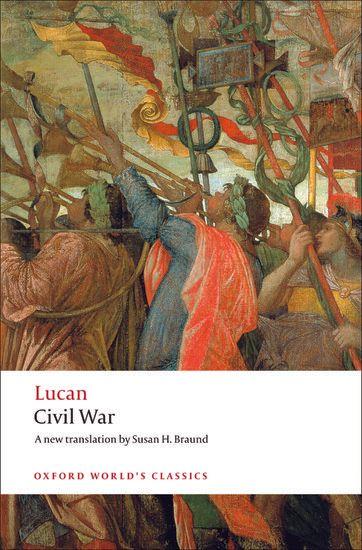
Lucan, grandson of Seneca the Rhetorician, and nephew of Seneca the Philosopher, was a remarkable and precocious product of the stimulating literary climate promoted by Nero.His epic poem on the civil war between Caesar and Pompey, unfinished at the time of his death, stands beside the poems of Virgil and Ovid in the first rank of Latin epic. The work is a powerful condemnation of civil war, and Lucan emphasizes the stark, dark horror of the catastrophes which the Roman state inflicted upon itself.This new translation in free verse conveys the full force of Lucan's writing and his grimly realistic view of the subject. The Introduction sets the scene for the reader unfamiliar with Lucan, and explores his relationship with earlier writers of Latin epic, and his interest in the sensational.
This new translation in free verse conveys the full force of Lucan's writing and his grimly realistic view of the subject. The Introduction sets the scene for the reader unfamiliar with Lucan and explores his relationship with earlier writers of Latin epic, and his interest in the sensational.
ABOUT THE SERIES: For over 100 years Oxford World's Classics has made available the widest range of literature from around the globe. Each affordable volume reflects Oxford's commitment to scholarship, providing the most accurate text plus a wealth of other valuable features, including expert introductions by leading authorities, helpful notes to clarify the text, up-to-date bibliographies for further study, and much more.