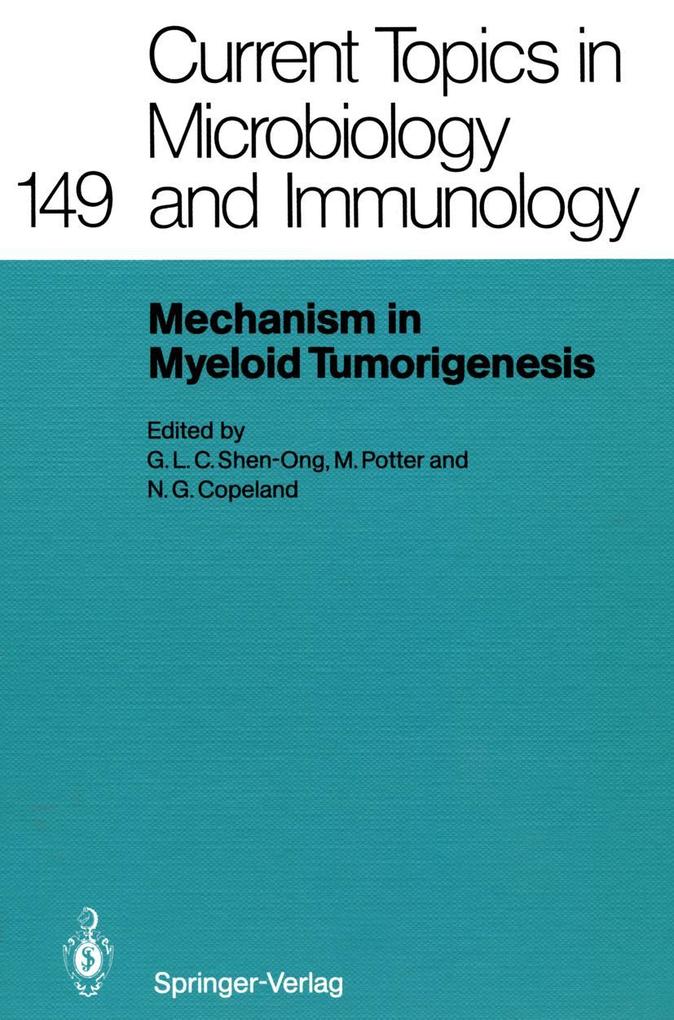
I. Classification of myeloid tumors.- The Pathology of Murine Myelogenous Leukemias.- II. Specific Chromosomal Abnormalities in Human and Murine Myeloid Hematologic Malignancies.- Chromosomal Abnormalities in Myeloid Hematologic Malignancies.- Radiation Induced Deletion of Chromosome 2 in Myeloid Leukemogenesis.- III. Disruption of "Oncogenes" by Virus Insertion in Murine Myeloid Tumorigenesis.- Recombinant Inbred Mouse Strains: Models for Studying the Molecular Genetic Basis of Myeloid Tumorigenesis.- Mechanisms in the Transformation of IL3-Dependent Hematopoietic Stem Cells.- Alternate Forms of MYB: Consequences of virus insertion in myeloid tumorigenesis and alternative splicing in normal development.- IV. Myeloid Leukemogensis Induced by Acute Transforming Virus Constructs in In Vitro and In Vivo Model Systems.- Retrovirus-induced Tumors Whose Developemnt is Facilitiated by a Chronic Immune Response: A Comparison of Two Tumors Committed to the Monocytic Lineage.- Studies of Secondary Transforming Events in Murine c-myc Retrovirus-Induced Monocyte Tumors.- Analysis of the Leukaemogenic Properties of the bcr-v-abl and GM-CSF Genes Using a New Retroviral Vector.- Biological effects of retroviral transfection of the murine Interleukin-3 gene into FDCP-Mix cells.- Conversion of Factor-Dependent Myeloid Cells to Factor Independence: Autocrine Stimulation is Not Coincident with Tumorigenicity.- V. Specific Genes Involved in Myeloid Tumorigenesis.- Biosynthesis of Macrophage Colony-Stimulating Factor (CSF-1): Differential Processing of CSF-1 Precursors Suggests Alternative Mechanisms for Stimulating CSF-1 Receptors.- The ets Family of Genes: Molecular Biology & Functional Implications.- VI. Proposed Mechanisms in Myeloid Tumorigenesis.- Adhesive Defects in ChronicMyeloid Leukaemia.- Induction of Leukemia by Avian Myeloblastosis Virus: A Mechanistic Hypothesis.- Role of Biologic Response Modifiers in the Growth and Differentiation of Myeloid Leukemic Cells.
Inhaltsverzeichnis
I. Classification of myeloid tumors. - The Pathology of Murine Myelogenous Leukemias. - II. Specific Chromosomal Abnormalities in Human and Murine Myeloid Hematologic Malignancies. - Chromosomal Abnormalities in Myeloid Hematologic Malignancies. - Radiation Induced Deletion of Chromosome 2 in Myeloid Leukemogenesis. - III. Disruption of Oncogenes by Virus Insertion in Murine Myeloid Tumorigenesis. - Recombinant Inbred Mouse Strains: Models for Studying the Molecular Genetic Basis of Myeloid Tumorigenesis. - Mechanisms in the Transformation of IL3-Dependent Hematopoietic Stem Cells. - Alternate Forms of MYB: Consequences of virus insertion in myeloid tumorigenesis and alternative splicing in normal development. - IV. Myeloid Leukemogensis Induced by Acute Transforming Virus Constructs in In Vitro and In Vivo Model Systems. - Retrovirus-induced Tumors Whose Developemnt is Facilitiated by a Chronic Immune Response: A Comparison of Two Tumors Committed to the Monocytic Lineage. - Studies of Secondary Transforming Events in Murine c-myc Retrovirus-Induced Monocyte Tumors. - Analysis of the Leukaemogenic Properties of the bcr-v-abl and GM-CSF Genes Using a New Retroviral Vector. - Biological effects of retroviral transfection of the murine Interleukin-3 gene into FDCP-Mix cells. - Conversion of Factor-Dependent Myeloid Cells to Factor Independence: Autocrine Stimulation is Not Coincident with Tumorigenicity. - V. Specific Genes Involved in Myeloid Tumorigenesis. - Biosynthesis of Macrophage Colony-Stimulating Factor (CSF-1): Differential Processing of CSF-1 Precursors Suggests Alternative Mechanisms for Stimulating CSF-1 Receptors. - The ets Family of Genes: Molecular Biology & Functional Implications. - VI. Proposed Mechanisms in Myeloid Tumorigenesis. - Adhesive Defects in ChronicMyeloid Leukaemia. - Induction of Leukemia by Avian Myeloblastosis Virus: A Mechanistic Hypothesis. - Role of Biologic Response Modifiers in the Growth and Differentiation of Myeloid Leukemic Cells.