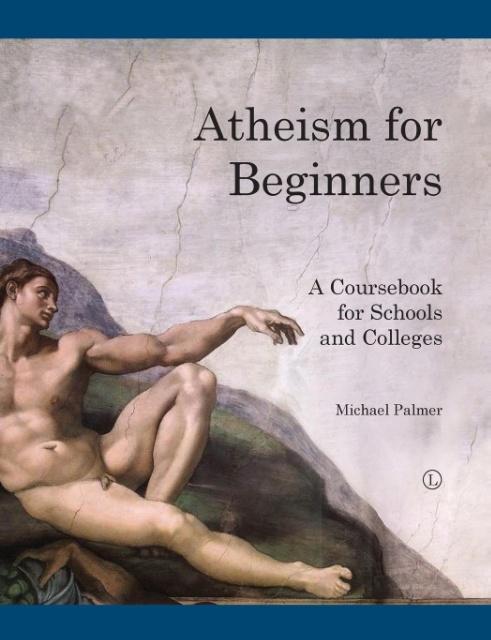
A comprehensive coursebook introducing students and teachers to the non-theistic side of the debate over God's existence and its rich philosophical pedigree.
Hurray for Michael Palmer!' is how Michael Martin, the distinguished American philosopher, greeted Palmer's The Atheist's Primer (Lutterworth, 2012). Atheism for Beginners, by providing a 'coursebook for schools and colleges,' differs from its predecessor in being designed specifically for teachers and their students. Yet, although different in focus and format, the intention remains the same: to reinstate the importance of philosophy within the debate about God's existence and to act as a corrective to the largely Darwinian criticisms levelled against religious belief by Richard Dawkins and the so-called 'new atheists'. So, in Palmer's lively history of atheism, extending from the ancient Greeks to the present day, we meet the enduring philosophical arguments against God and the great literature in which they are expressed.
Atheism for Beginners is user-friendly and presumes no special grounding in philosophy. Throughout assistance is given by numerous aids to learning: there are exercises, marginal notes, essay questions, bibliographies and a glossary. Also provided are fourteen short biographies of famous atheists. In these respects Palmer follows the format first presented in his widely-read Moral Problems of 1991, long established as a core text in the teaching of philosophy.
In Atheism for Beginners, Palmer covers the main atheistic arguments, discussing issues such as creation, morality, evil, miracles and the motivations of belief. Particular attention is paid to the work of Hume, Marx, Nietzsche and Freud, with a special chapter devoted to the development of 'disproof atheism'. Atheism is often criticized for being unduly pessimistic: that without God there is nothing to look forward to, no life after death, no final righting of wrongs and no hope of salvation. But this, Palmer argues, is 'a slander against the atheistic outlook'. He concludes, therefore, on a positive note, explaining that happiness and personal fulfilment are to be found in the very materialism that religious belief rejects.
Inhaltsverzeichnis
1. The Meaning of Atheism
i. Definition of Atheism
ii. The Variety of Gods and the Many-Gods Objection
iii. Study Questions
iv. Guide to Further Reading
2. Creation
i. The Beginnings of Atheism: Its Rise and Fall
ii. The Christian Theory of Creation
iii. The Re-emergence of Atheism
iv. Hume on the Argument from Cause
v. An Infinite or Finite Universe?
vi. Study Questions
vii. Guide to Further Reading
3. The Design of the World
i. Introducing Monkeys and Darwin
ii. The Argument from Design
iii. Hume's Criticisms of the Design Argument
iv. Darwin's Criticisms of the Design Argument
v. Post-Darwinian Criticisms of the Design Argument
vi. Study Questions
vii. Guide to Further Reading
4. The Argument from Evil
i. Moral and Non-Moral Evil
ii. Evolution as Non-Moral Evil
iii. The Problem of Evil: A Logical or Evidential Problem?
iv. The Problem of Evil: The Logical Argument
v. The Problem of Evil: The Evidential Argument
vi. Study Questions
vii. Guide to Further Reading
5. The Moral Argument
i. Introduction: Moral Relativism and Religion
ii. Criticisms of the Moral Argument
iii. Nietzsche's Critique of Religious Morality
iv. Study Questions
v. Guide to Further Reading
6. Miracles
i. Some Miracles
ii. Definition of a Miracle (1)
iii. Definition of a Miracle (2)
iv. Hume's Critique of Miracles: Are Miracles Impossible?
v. Hume's Critique of Miracles: Are Miracles Improbable?
vi. Conclusion
vi. Study Questions
vii. Guide to Further Reading
7. The Impulse to Believe.
i. Introduction: The Experiences of Faith
ii. Projection Theory: Ludwig Feuerbach
iii. Marx's Projection Theory: Religion as the Opium of the People
iv. Freud's Projection Theory: Religion as a Universal Obsessional Neurosis
v. Conclusion: Is Atheism Pessimistic?
vi. Study Questions
vii. Guide to Further Reading
8. Disproving God
i. Introduction: The Logic of God's Attributes
ii. Arguments from Incoherence
iii. Two Theistic Defences
iv. Some conclusions
v. Study Questions
vi. Guide to Further Reading
Appendix