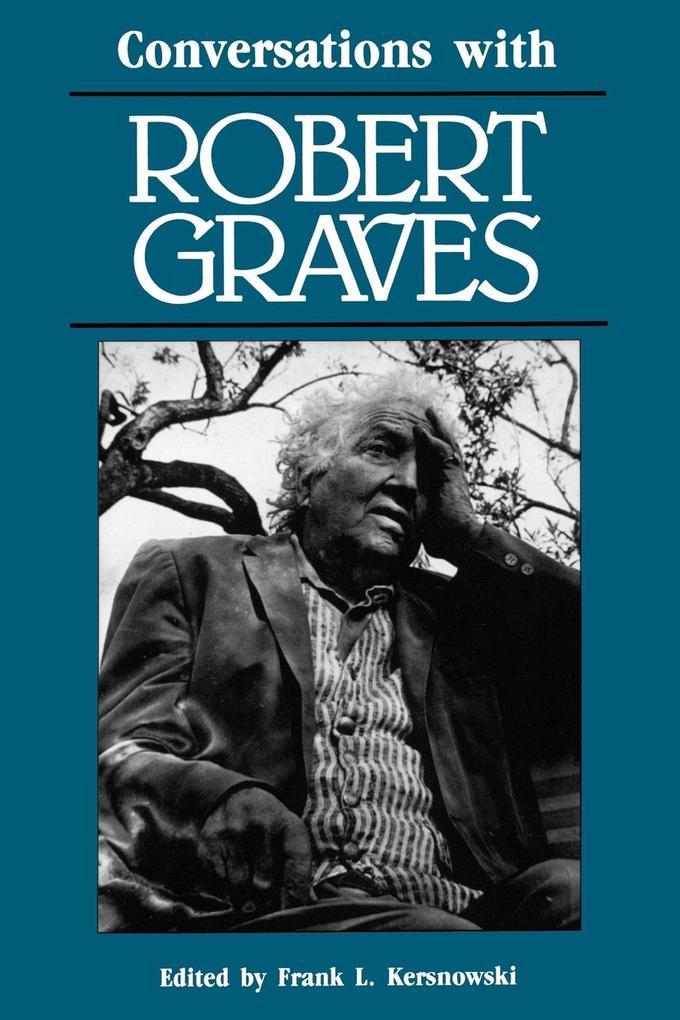
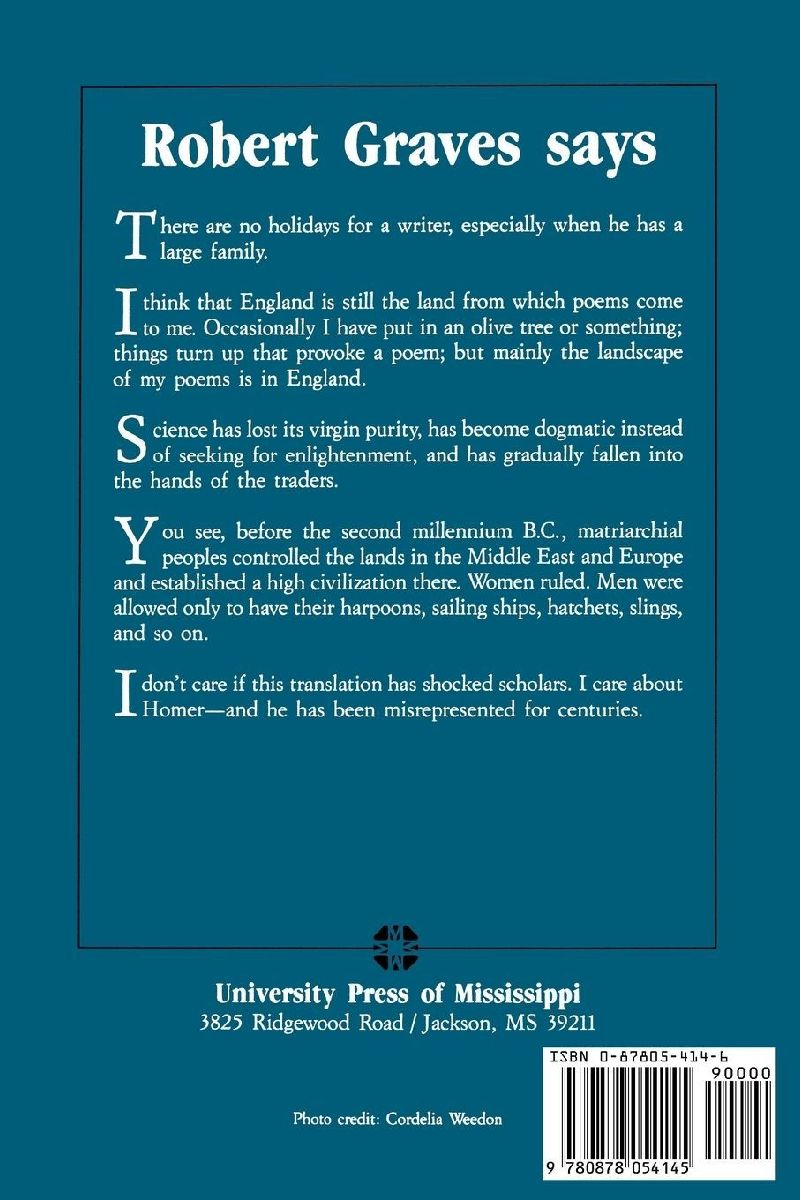
Though he lived most of his life in the remote village of Deya on the island of Mallorca, Robert Graves (1895--1985) was conversant with the most important issues of this century and was acquainted with many of the most powerful people. Jorge Luis Borges called him a soul above. Graves wrote almost restlessly on subjects of great diversity: myths of the Greeks, Romans, Hebrews, and Celts; modern science and economics; contemporary society and culture as well as of ancient Greece and Rome, of Celtic Wales and Ireland, of the time of Milton, and of the American Revolution.
He was a poet of great fame, a celebrated writer of historical novels, and the man who imprinted the name and identity of the White Goddess upon the cultural language. His translations of Latin classics have been applauded; his recastings of Biblical and Persian texts attracted irascible attention from scholars.
Throughout his long and productive life, whether he was talking with Virginia Woolf, Peter Quenell, Jo