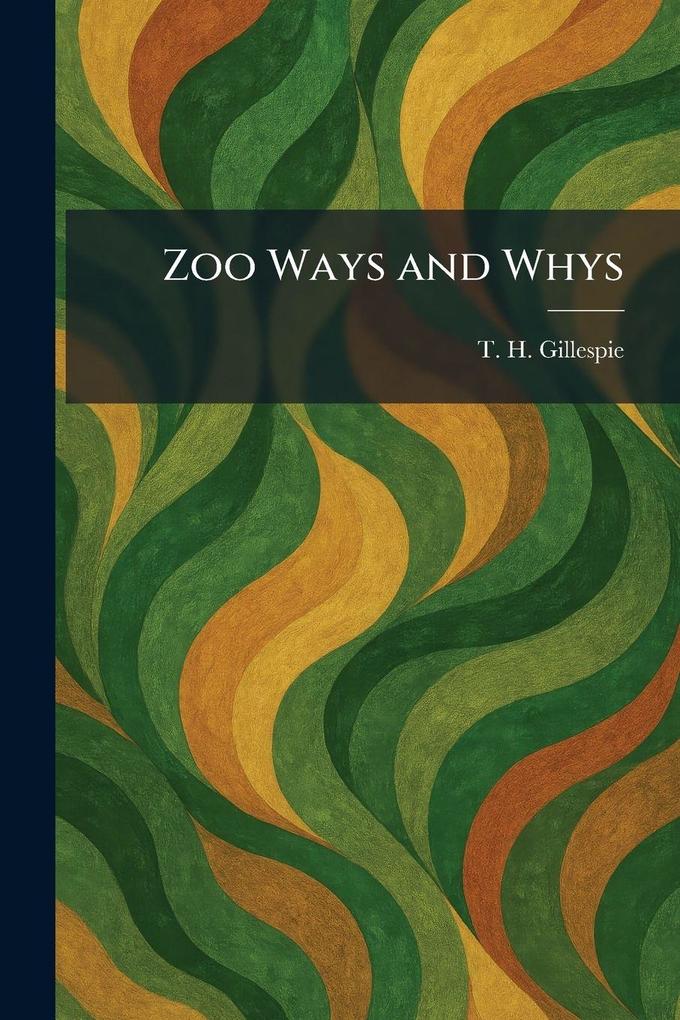
"Zoo Ways and Whys" is an engaging and insightful examination of the animal kingdom as seen through the lens of a dedicated naturalist. Written by T.H. Gillespie, this work provides a fascinating series of observations and essays that explore the behavior, temperament, and biological mysteries of various zoo inhabitants. From the daily habits of large mammals to the intricate needs of smaller creatures, the book seeks to answer the questions that naturally arise when observing wildlife in a managed setting.Gillespie combines scientific curiosity with a storyteller's flair, making the study of zoology accessible and charming for a broad audience. The work delves into how animals interact with their environments and their human caretakers, offering a unique perspective on the complexities of the natural world. By focusing on the unique personalities of individual animals, the author bridges the gap between scientific study and public appreciation for nature.
As a significant piece of early 20th-century natural history literature, "Zoo Ways and Whys" remains a testament to the importance of observation and conservation. It serves as an informative guide for anyone interested in the inner workings of animal life and the historical development of zoological understanding.
This work has been selected by scholars as being culturally important, and is part of the knowledge base of civilization as we know it. This work was reproduced from the original artifact, and remains as true to the original work as possible. Therefore, you may see the original copyright references, library stamps (as most of these works have been housed in our most important libraries around the world), and other notations in the work.
This work is in the public domain in the United States of America, and possibly other nations. Within the United States, you may freely copy and distribute this work, as no entity (individual or corporate) has a copyright on the body of the work.
As a reproduction of a historical artifact, this work may contain missing or blurred pages, poor pictures, errant marks, etc. Scholars believe, and we concur, that this work is important enough to be preserved, reproduced, and made generally available to the public. We appreciate your support of the preservation process, and thank you for being an important part of keeping this knowledge alive and relevant.